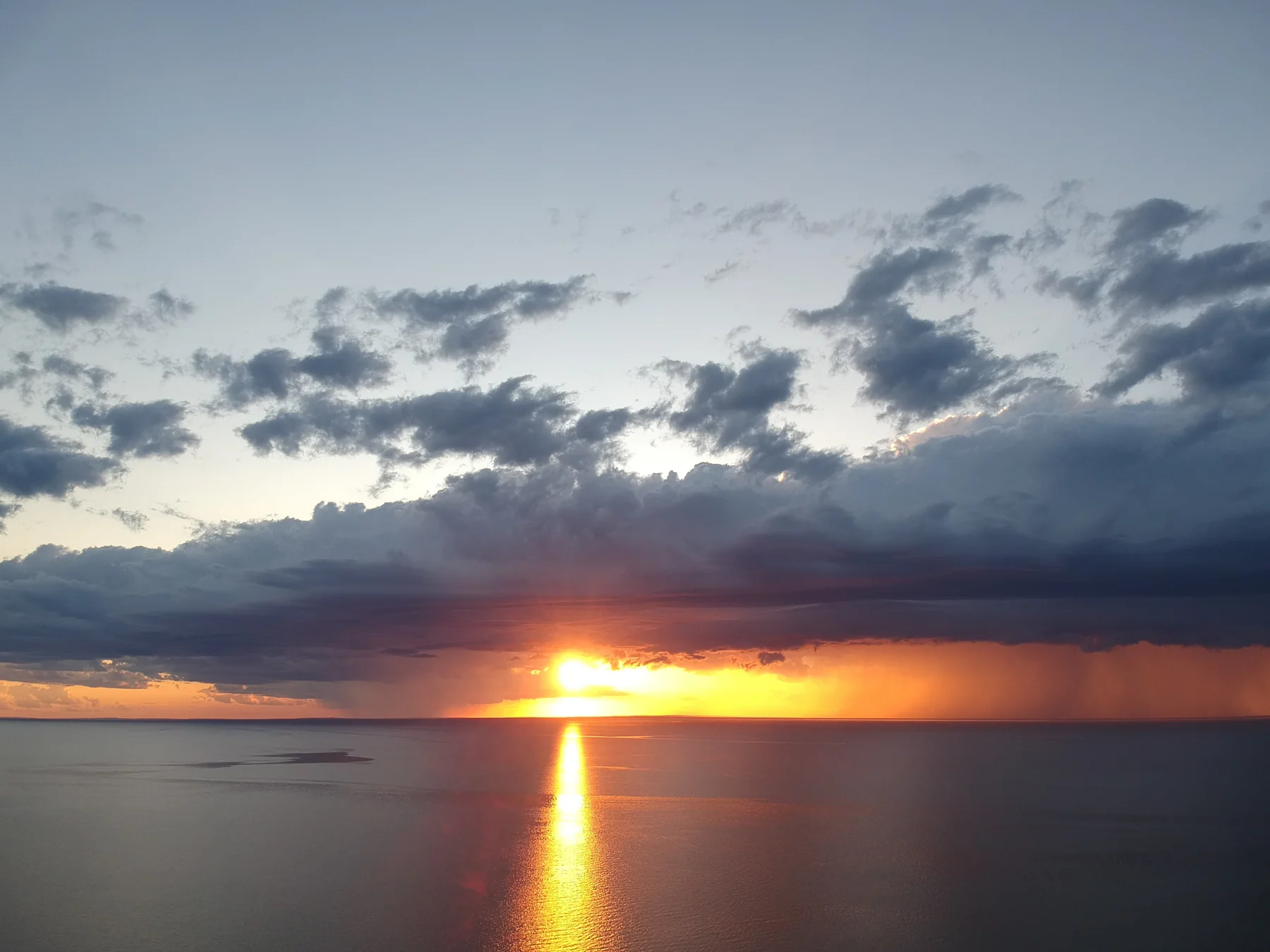
- ExtractTake faster than a place can renew.
- ConvertTurn living wealth into units of exchange.
- ConsumeReduce value to a single use.
- ExternalizeSend waste, risk and repair downstream.
- RepeatBegin again as though the account were clear.
Ancient intuition · field observation · modern synthesis
The Water Bearer’s Codex
Water is more than a commodity. It is a living circulation—and an unfolding question of how we belong to the world it sustains.
The Water Bearers Codex follows water across disciplines, scales, and centuries—drawing from the observations of Viktor Schauberger, the geometric models pursued by his son Walter, the interpretations of Callum Coats, the experiments of Gerald Pollack, and the evolving languages of fluid dynamics, electrokinetics, sonochemistry, ecology, and biomimicry.
At its center is a simple proposition: water is worth studying not only for what it is, but for how it moves, organizes, transforms, and enters into relationship with the living world. Temperature, pressure, geometry, mineral contact, electrical charge, boundaries, vortices, and biological membranes all influence its behavior. Seen through this wider lens, water becomes more than a passive carrier: it is an active participant in landscapes, organisms, climates, and the continual circulation of matter and energy.
Like a whirlpool, the Codex draws disparate currents of knowledge into encounter. Historical observations are placed beside contemporary experiments; natural forms beside engineering; established science beside unresolved questions; and direct observation beside speculation. The purpose is not to collapse these traditions into a single doctrine, but to discover where they converge, where they contradict one another, and where their tensions reveal new questions worth pursuing.
Throughout nature, water repeatedly demonstrates the intelligence of relationship: it follows gradients, negotiates resistance, carves geometry from stone, transports nutrients, moderates temperature, organizes boundaries, and connects processes occurring across vastly different scales. Rivers branch like vascular systems; vortices emerge wherever fluids exchange momentum; cycles of evaporation, condensation, infiltration, and return bind atmosphere, geology, and life into one planetary circulation.
The Water Bearers Codex is therefore not presented as a final theory of water, but as an evolving field of inquiry—an invitation to look more carefully at the substance upon which nearly every living system depends. By following its structures, movements, interfaces, and cycles, we may discover not only a deeper understanding of water, but new ways of thinking about technology, ecology, architecture, and our own participation within the living world.
DESCEND ↓
The method · From specialization to comprehensivism
Study the part. Follow it into the whole.
Specialist lensIsolate · measure · test
Comprehensivist lensRelate · integrate · understand
Specialization gives knowledge its sharpness: it isolates a variable, names a mechanism and tests a claim. Comprehensivism restores the field around it—parts, processes, scales and consequences held in one view without erasing their differences. The Codex needs both: specialist evidence and comprehensivist understanding.
Nature does not divide itself into hydrology, geology, biology, chemistry and climate. Rain enters soil; roots alter infiltration; rock changes chemistry; temperature changes density and oxygen; organisms redirect flow. What specialists examine separately, the living watershed performs together.
A watershed's account can be read through its springs and rivers. A spring reflects its recharge area and aquifer; a river gathers the effects of weather, geology, life and human decisions across a basin. Flow, temperature, chemistry, sediment and living communities are its observable entries. No single measurement tells the whole story; repeated observation reveals how those relationships change over time.
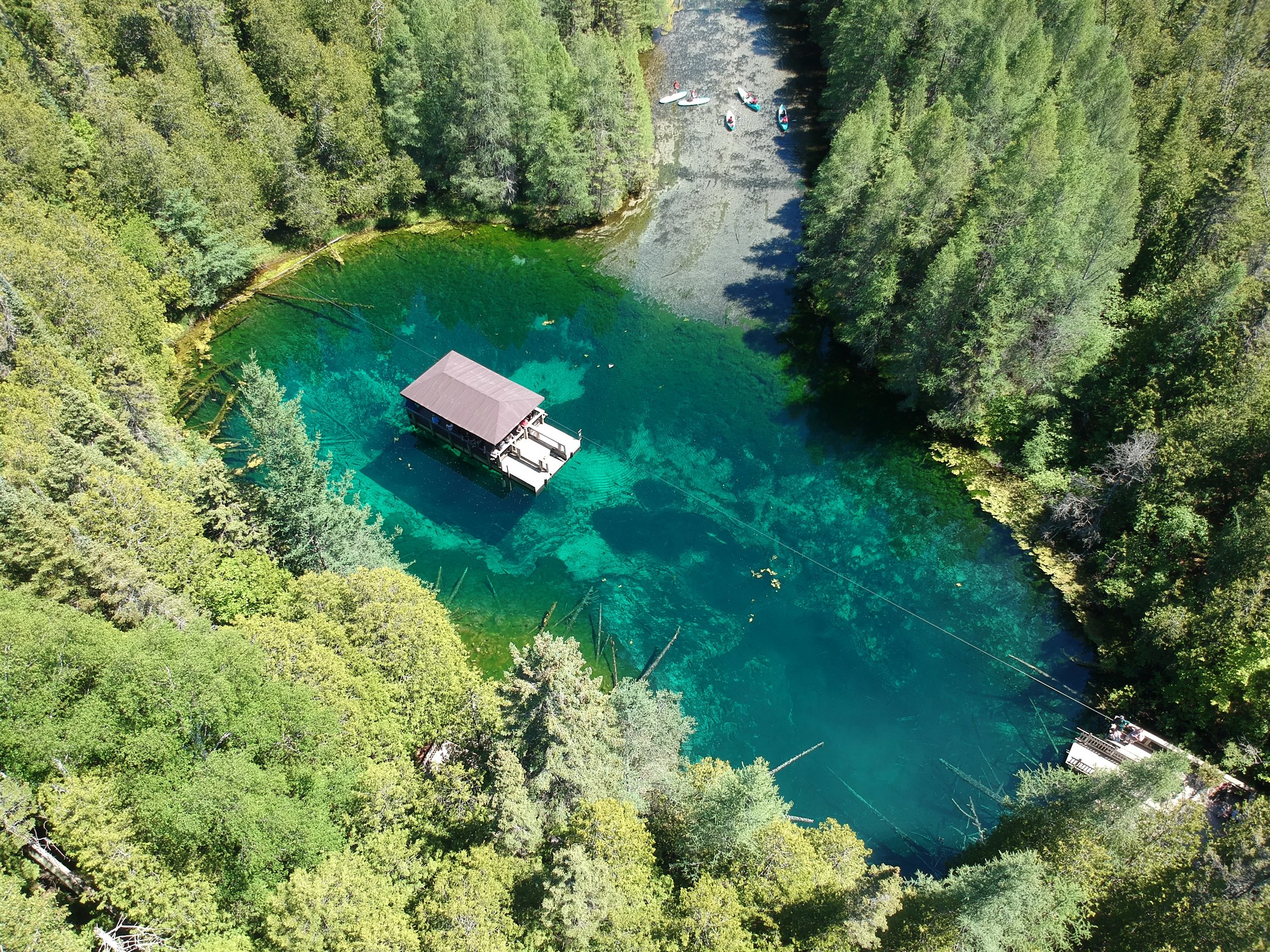
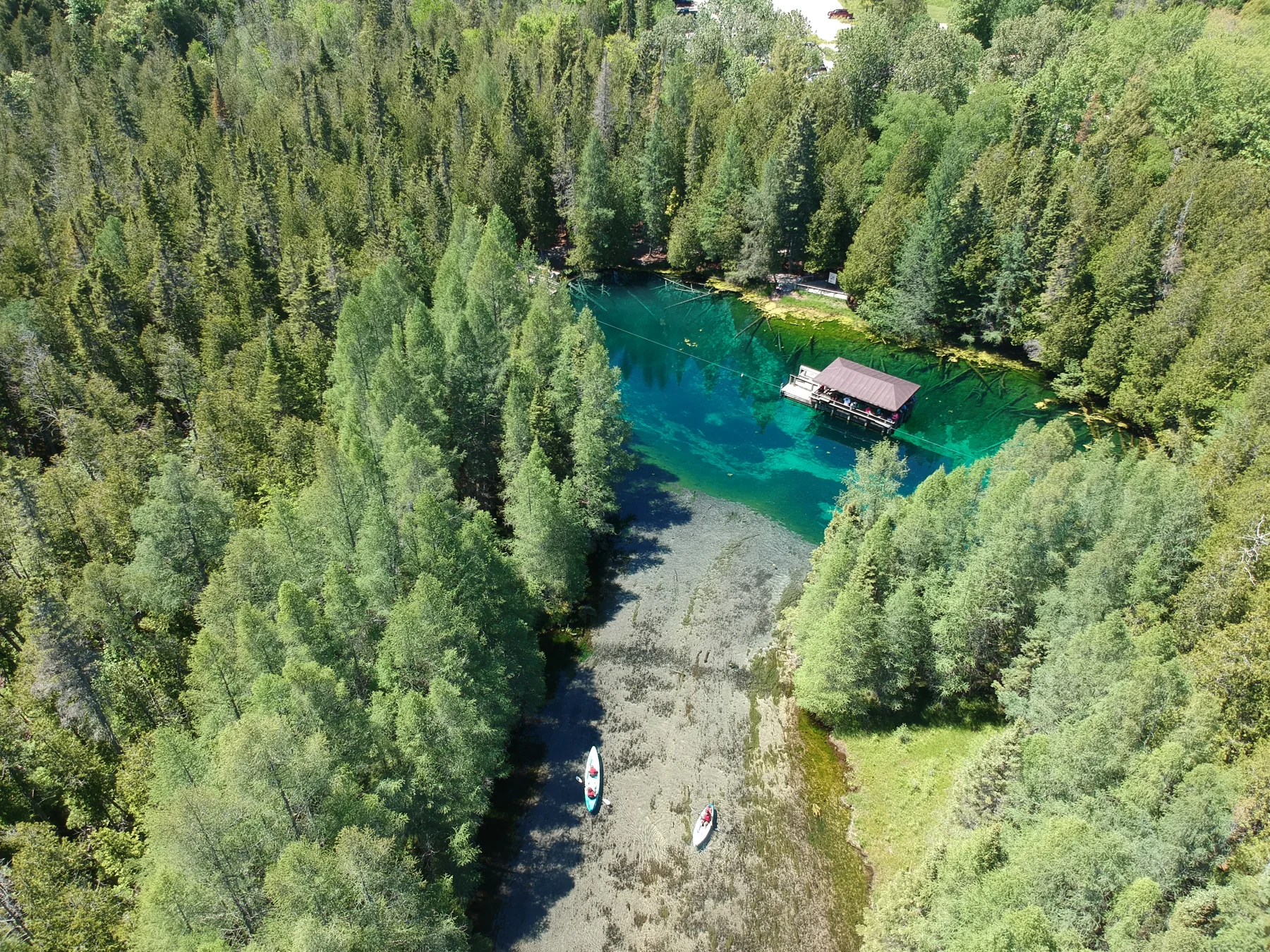
Where earth keeps a mirror for heaven.
Kitch-iti-kipi—G'chi-dikibi in modern Anishinaabemowin—is known in English as the Big Spring. Here, cold groundwater rises through fractured limestone and gathers forest, sky, sand, stone, trout and submerged wood within one clear basin. What looks like a single pool is the visible expression of a much larger living system: rain and snow entering the land, water moving through rock, minerals dissolving, temperature holding steady, habitat forming and human choices determining what will endure. In that sense, the spring is the Codex in miniature—a symbol of interconnected ecosystems and of the hidden relationships that sustain every visible life.
I grew up in Manistique, near Kitch-iti-kipi, and I dedicate The Water Bearer's Codex to this sacred spring of my home landscape. The spring and surrounding land are also recognized as a Traditional Cultural Property significant to the Great Lakes Anishinaabek. I offer this dedication with gratitude and respect—for the place itself, for the peoples whose relationship with it long precedes my own, and for the springs, forests, wetlands and Great Lakes waters that first taught me to understand water not as scenery or commodity, but as teacher, inheritance and living bond.
Palms Book State Park · original aerial photograph, 2019 · DNR place facts · DNR cultural plan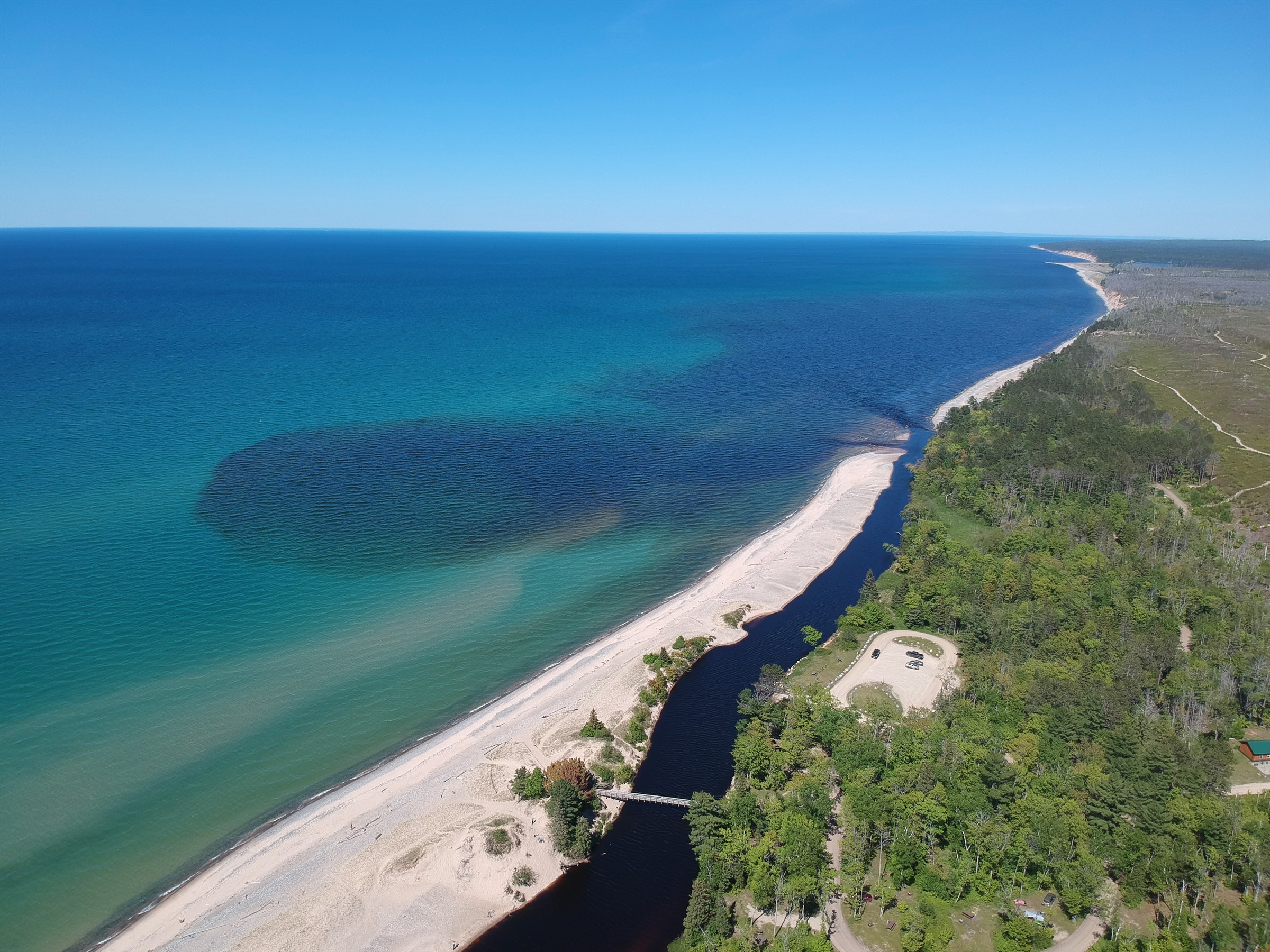
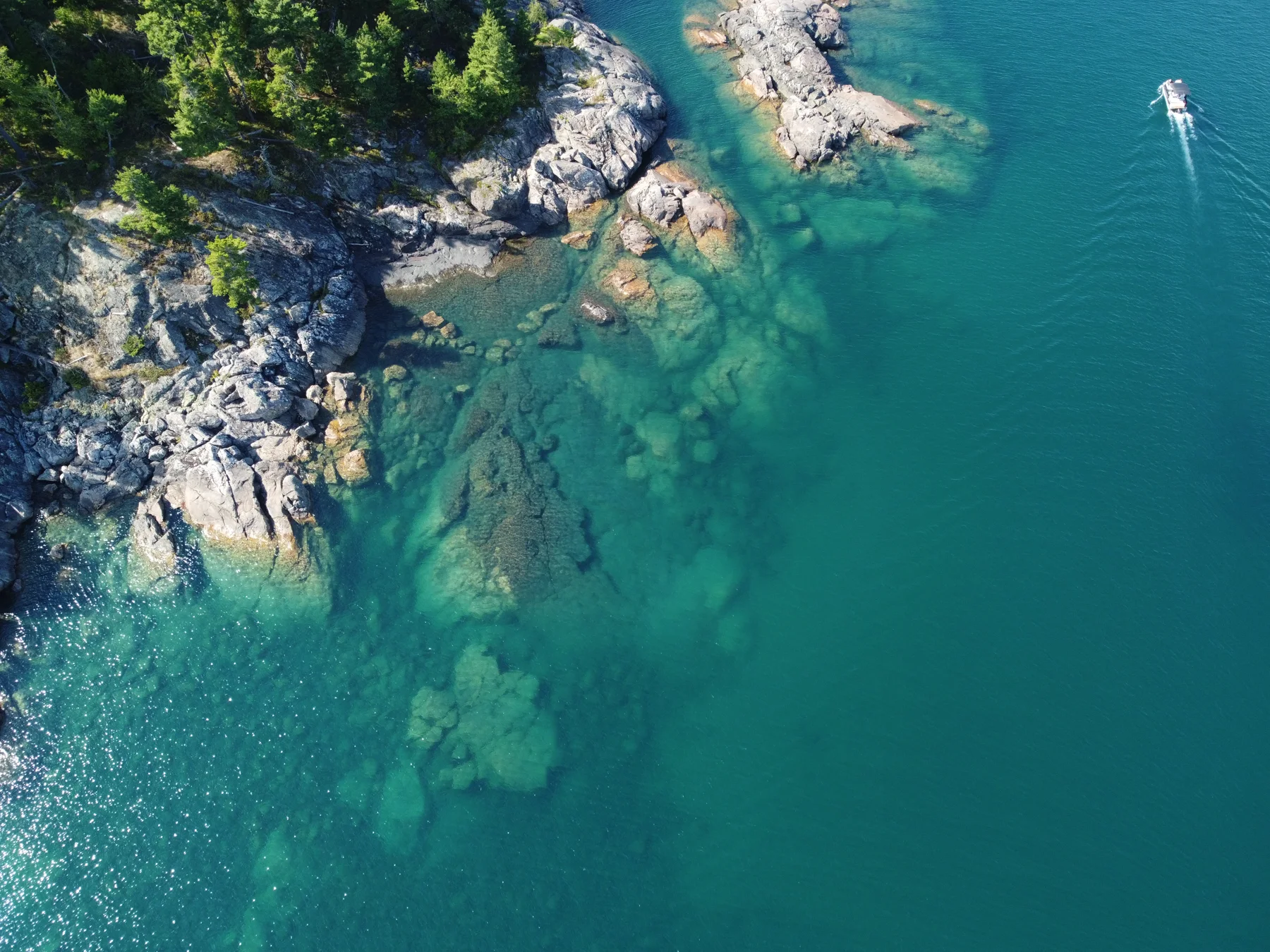
Where the watershed gives its account to the inland sea.
Kitch-iti-kipi and the Two Hearted belong to different watersheds draining toward different Great Lakes. Their pairing follows a shared question: what does water reveal about the land that gathers and releases it? At the spring, hidden relationships rise into view. At the river mouth, a basin gives its account to a larger body of water.
Across its 35-mile passage through forest and wetland, the Two Hearted carries that account in flow and temperature, sediment and nutrients, organic matter and the life these conditions sustain. Tributary, root, bog, bank, rain, fire and human decision all contribute. Here, where the river meets Lake Superior, the land's history becomes a material inheritance for the inland sea.
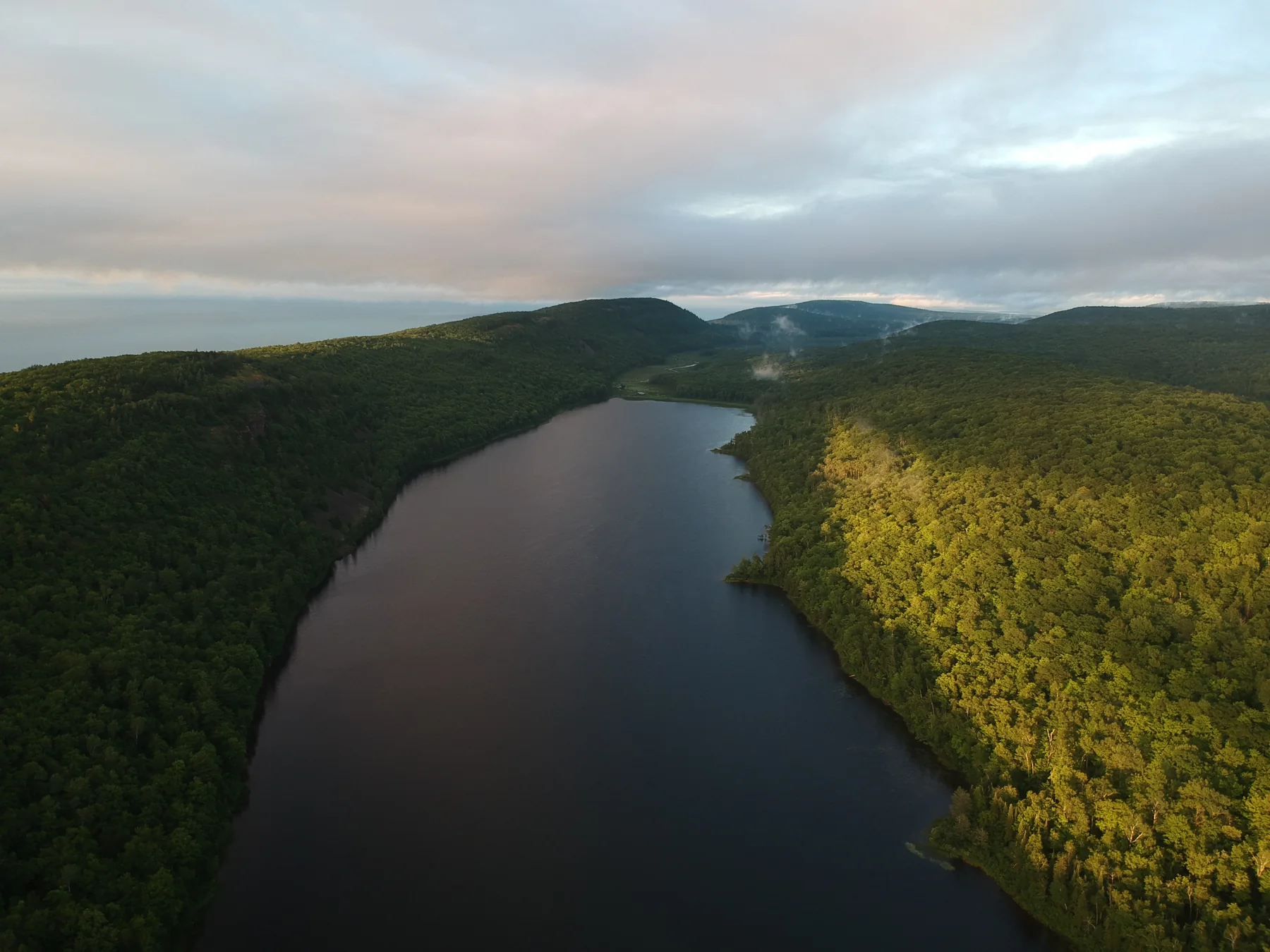
Fire and return · Duck Lake Fire, 2012The 2020 photograph makes another part of the account visible: the land's return from the lightning-caused Duck Lake Fire. In 2012 it burned 21,069 acres and destroyed 136 structures, including Rainbow Lodge near the river mouth. In places, sandy soils were left nearly bare of organic matter. By 2020, young jack pine and groundcover were returning; natural regeneration and 3.5 million planted trees were rebuilding habitat, including for Kirtland's warbler. That history reaches beyond the burn: changes in forest cover, soil, shade, runoff and habitat can alter the water a basin delivers. Drought- and wind-driven wildfire can devastate communities and watersheds; carefully planned prescribed fire can renew fire-adapted forest and reduce hazardous fuels. Fire is neither cure nor catastrophe in the abstract. Its meaning lies in intensity, timing, boundaries, moisture and stewardship.
Original aerial photograph, 2020 · Michigan DNR: river plan · Duck Lake Fire, ten years later · prescribed fire explainedThrough the water bearer's lens · Photography by Ryan Nagy
Water, held in light.
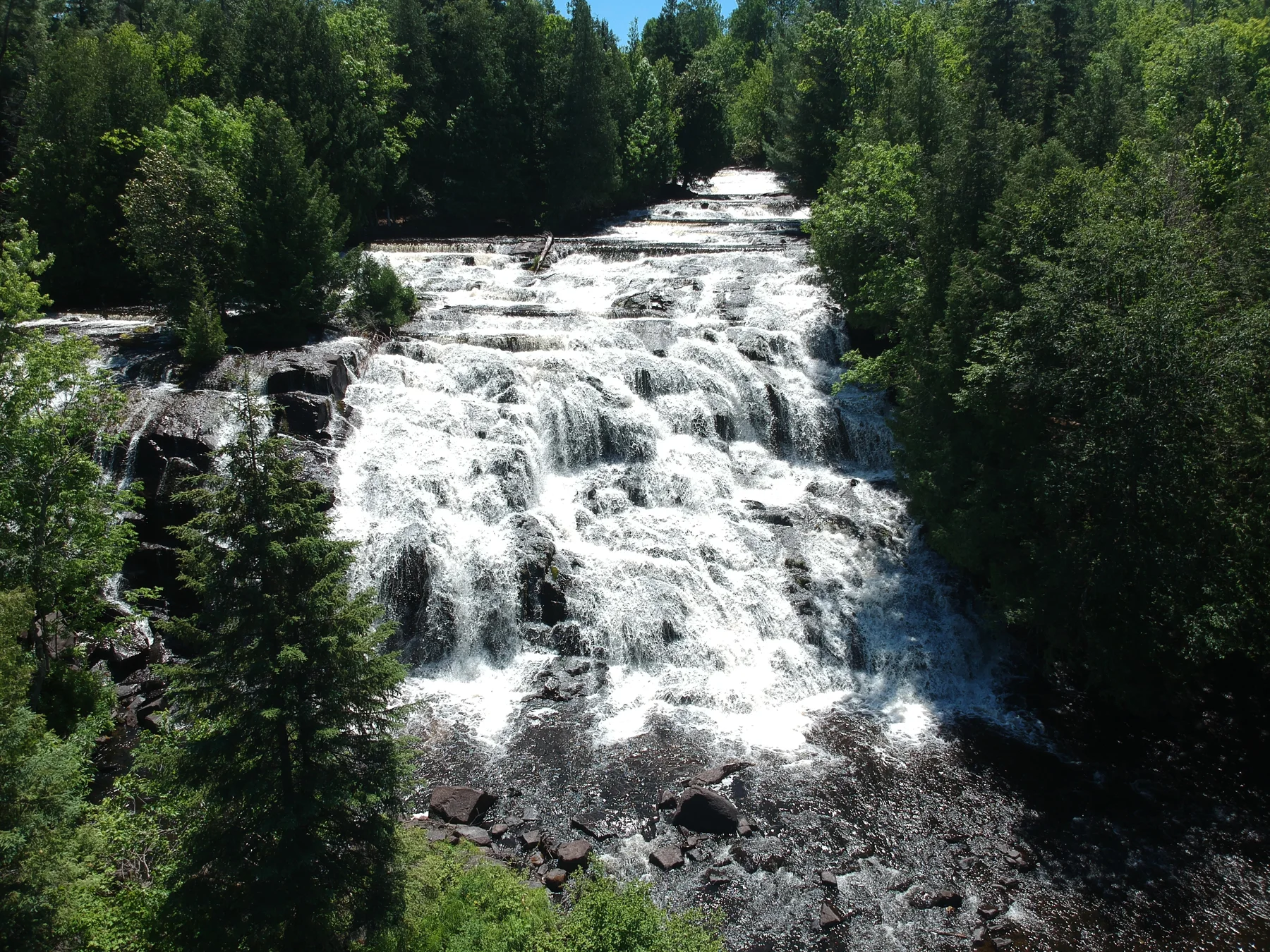
Rivers, springs, waterfalls, and the meeting of forest and Great Lake. A personal field of attention, seen from above and beside the water.
THE GREAT LAKES REGION · A WATER EXHIBITION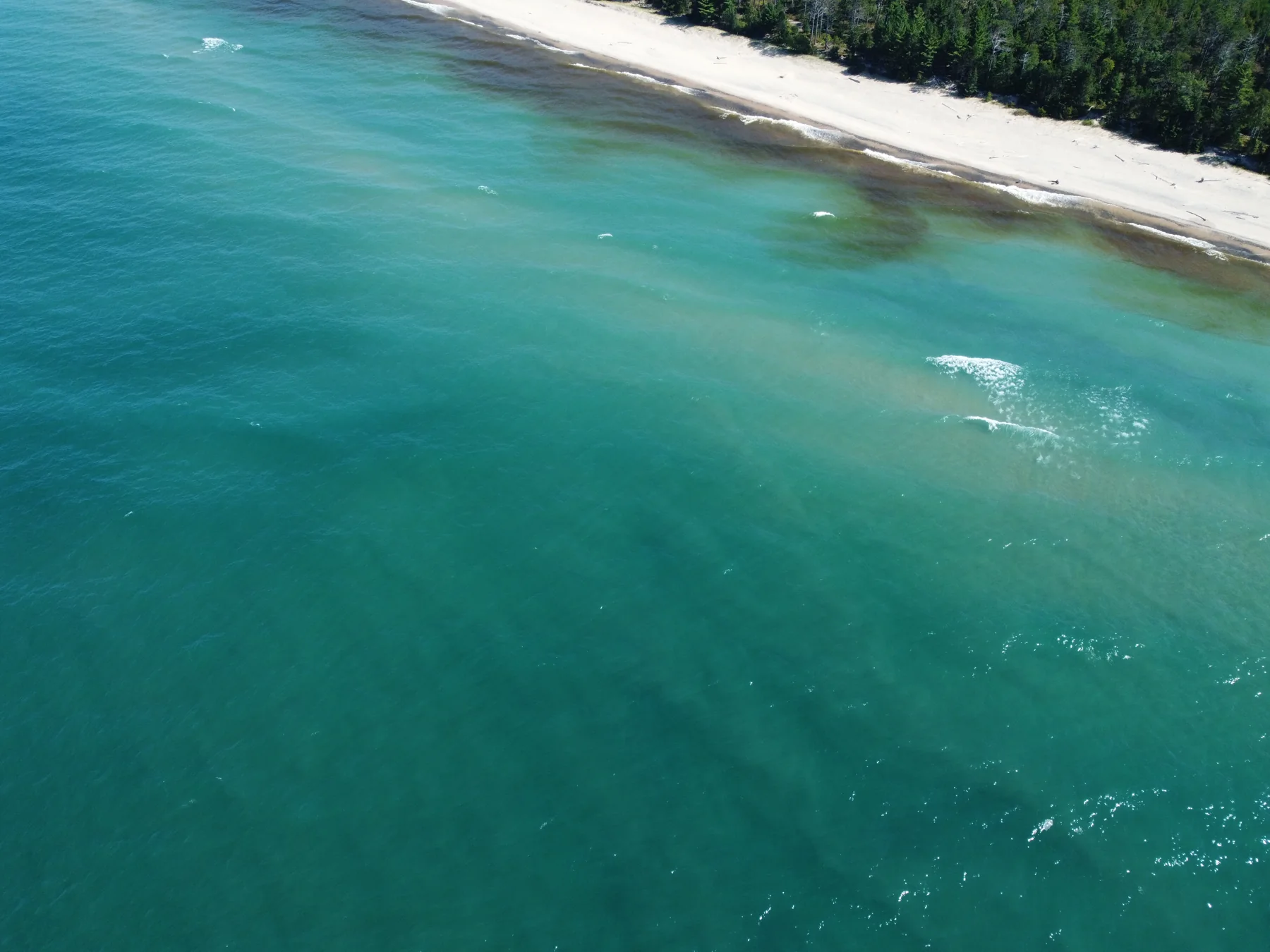
68 photographs · Field notes · Locations
Each view holds for about ten seconds.
To read this account, begin with attention to place. The discipline of following water through the relationships it reveals also shaped the life and work of an Austrian forester a century ago.
Introduction · Die Einführung · What this codex is
In the Austrian forest, water became a lifelong teacher.
Viktor Schauberger (1885–1958) was an Austrian forest warden who built a lifelong inquiry by watching cold springs, mountain streams, fish, sediment, temperature and forest shade. His observations supply the Codex's historical current; water itself remains the subject, examined through natural cycles, motion, energetics and technology.
The life, briefly
Born 30 June 1885 in Ulrichsberg, Upper Austria, into a family that had kept forests for generations under the motto Fidus in silvis silentibus — "Faithful to the silent forests." At eighteen he refused university, over his father’s objection, so that his seeing would not be “corrupted” by categorised thinking; he became a junior forest warden in wilderness that had scarcely been touched. There he watched water do things the textbooks said it could not: trout standing motionless in torrents, stones floating on winter nights, springs that ran strongest in the cold and the dark.
His log-flumes of the 1920s — which moved heavy beech and ore in defiance of conventional hydraulics by keeping the water cold and spiralling — made him famous, put the state hydrologist Philipp Forchheimer in his corner, and won him a national platform he spent the rest of his life losing. He argued with academics, was summoned by Hitler in 1934 (and walked out), was coerced into weapons research under the SS, and after the war descended into poverty while trying to build his implosion machinesforthcoming. In 1958 a Texas consortium flew the ailing 73-year-old and his son Walter to the United States, extracted his life’s work under a contract he could not read, and sent him home. He died five days after returning to Linz, on 25 September 1958, repeating: “I don’t even own myself.”
The historical warning
Schauberger feared systems that consumed their own sources
Kapieren und kopieren — comprehend and copy Nature.
Schauberger's warning grew from the contrast he believed he saw between cold, shaded, inward-spiralling water in healthy forests and the heated, accelerated flows produced by clear-cutting and rigid engineering. However eccentric his later theories became, the historical provocation remains useful: design should begin by comprehending the living process it intends to alter.
The comprehensive task
Translate attention into design responsibility
Water is not one subject among many. It is the medium joining them.
Water joins domains that institutions often divide: public health, ecology, agriculture, infrastructure, energy and climate. The practical task is to see those dependencies before a failure in one becomes an emergency in all the others. Knowledge must arrive before scarcity becomes policy and emergency becomes inheritance.
The inquiry now widens from one observer to the systems around us. Can a civilization use water without spending the conditions that renew it? The answer is given in what a watershed carries onward—and in what remains able to renew it.
The watershed ledger · civilization and return
Interpretive framework
The civilizational question · What the watershed records
The watershed keeps the ledger our economy forgets.
A watershed is an account written in movement. Forests and soils, aquifers and drains, living communities and human decisions shape what is held, what is released and what remains available to future life. At a river mouth, part of that history passes into a larger receiving system. The account continues beyond the basin: effects may appear downstream, underground, in the atmosphere or in the body, whether or not an economic balance sheet records them.
A practical reading
Two ledgers. One watershed.
The economic ledger can close at the transaction. The watershed's account continues through withdrawals, diversions, pollution and repair—and through the water, sediment and nutrients it passes onward. Responsibility follows those consequences beyond the boundary of a property, a project or a reporting year.
- ReceiveBegin with what the place can hold.
- InfiltrateSlow the flow into soil and system.
- NourishLet what enters sustain more than one life.
- FilterImprove what passes through.
- ReturnGive back water, fertility and the capacity for renewal.
The missing entry is downstream. What a balance sheet calls an external cost does not disappear; it changes location, timescale or custodian. Stewardship begins by keeping that remainder inside the decision.
The ledger in the present tense
The bill is already arriving.
The warning is not that every place is simply drying. It is that a hotter atmosphere is making the hydrological system more energetic, uneven and extreme. Record moisture and violent rainfall can coexist with exhausted soil, abnormal river flow, shrinking frozen storage and falling aquifers. The following measurements are not predictions. They are entries already visible in the watershed's account.
The hydrologic cascade · One deficit, changing forms
The shortage moves before it appears at the tap.
Heat does not dry every basin in the same way. Rainfall, humidity, wind, vegetation, geology, snow, reservoirs and human withdrawals determine how the signal travels; some regions are becoming wetter even as others dry. But across many water-limited and snow-fed landscapes, a consequential sequence is already visible. Heat enlarges atmospheric demand. Snow and ice release water earlier and retain less for summer. Soil moisture is spent faster. Rivers arrive smaller, warmer or out of season. Farms and cities turn toward wells, and pumping can then reach back into the streams, springs and wetlands it was meant to replace. The stages can overlap, pause in wet years or be interrupted by stewardship. They still belong to one account.
HeatAtmospheric demandFrozen storageSoilRiverAquifer
The atmosphere is carrying more—and asking more.
2024 was the hottest year in WMO's 175-year record, at 1.55 ± 0.13 °C above the 1850–1900 average. NOAA also measured record global atmospheric water vapour and the wettest annual maximum daily rainfall over land. This is the double motion of a warming water cycle: a warmer atmosphere can hold more moisture for intense rain while increasing the evaporative demand placed on soil, vegetation and open water.
The IPCC concludes with high confidence that warming increases atmospheric thirst and can deepen drought by depleting soil moisture. Rainfall alone no longer describes the deficit.
Normal flow is becoming the exception.
NOAA's drought index reached a record footprint in 2023: severe or extreme drought covered 16.8 percent of assessed global land in July, while moderate-or-worse drought peaked at 29.7 percent in September. That footprint eased in 2024; drought is neither permanent nor uniform.
Yet the hydrological imbalance persisted. WMO found 2023 the driest year for global rivers in 33 years, and in 2024 only about one-third of global river-basin area had normal discharge—the sixth consecutive year of widespread above- or below-normal flow.
The mountain reservoir is being liquidated.
Snow and glacier ice are water delayed—stored in cold seasons and released when downstream ecosystems, farms and cities need it. In 2024, glaciers lost about 450 gigatonnes; all 19 assessed glacier regions reported loss for a third consecutive year. NOAA's 58 reference glaciers lost an average 1.30 metres of water equivalent, the greatest mean loss in that 55-year record.
Melt can initially increase runoff. Once a glacier passes "peak water," however, annual contribution declines because less ice remains. UNESCO estimates that mountain systems supply 55–60 percent of annual global freshwater flows and that about two billion people depend on mountain waters.
The continents carry less accessible freshwater.
NASA's GRACE satellites found that average terrestrial freshwater storage during 2015–2023 was about 1,200 cubic kilometres lower than during 2002–2014. The measure combines groundwater, soil moisture, lakes, rivers and seasonal snow; it is not an aquifer-only estimate.
The abrupt decline began during major droughts and remained through the study period. Researchers describe a possible persistently drier continental phase, while cautioning that its duration and exact attribution remain uncertain. The observation is still stark: the stored buffer beneath and across the land stepped downward and had not recovered by 2023.
The backup supply is being spent faster.
A 2024 synthesis of roughly 170,000 monitoring wells found water levels falling faster than 0.1 metre per year in 36 percent of 1,693 studied aquifer systems during the twenty-first century. Among 542 systems with adequate records spanning 1980–2022, groundwater decline accelerated in 30 percent.
The pattern is widespread, not universal: some aquifers stabilized or recovered after policy changes, managed recharge or shifts in supply. But pumping can intercept water that would have sustained streams, draw river water into aquifers, sink land and leave wells stranded. Drought's reserve is connected to the river.
The same basin can yield a smaller river.
At Lees Ferry, reconstructed natural flow averaged 12.5 million acre-feet in 2000–2023, about 16 percent below the 1906–2006 average reported by the Bureau of Reclamation. A USGS model separately estimated that Upper Colorado mean flow decreases about 9.3 percent for each 1 °C of basin-wide warming, largely because snow loss reduces reflectivity and increases evaporation.
That sensitivity is modeled, and precipitation remains a major source of uncertainty and year-to-year variation. The disciplined conclusion is nonetheless urgent: warming can change both when snow-fed water reaches a channel and how much survives the journey.
Where the global signal becomes local. A smaller flow carries a larger burden: less dilution, warmer channels, lower dissolved oxygen, disconnected habitat, falling wells, costlier treatment and less hydropower. The planetary measurements above resolve below into four place-bound expressions of the stressed cycle: depletion, subsidence, contamination and weakened forest-rain feedback.
A reserve spent as income.
From predevelopment to 2019, the average water level across the measured High Plains Aquifer declined 16.5 feet, and recoverable groundwater storage fell by about 286.4 million acre-feet. Some monitored wells declined by more than 200 feet.
The loss is uneven and substantial water remains in parts of the system. That unevenness is the warning: a continental aquifer can persist on a map while particular farms and towns lose practical access locally.
When the container collapses.
USGS modeling estimates that California's Central Valley lost roughly 158 cubic kilometres of groundwater storage from predevelopment through 2019. About 15 percent of that loss became permanent as fine-grained sediments compacted.
Overpumping does more than lower a hidden water line. It can sink the land, damage canals and wells, and reduce the aquifer's future capacity to store water when wet years finally return.
A well can be full and unusable.
A USGS national model estimates that groundwater supplies serving 71–95 million people may contain at least one of 24 measured PFAS. That is an occurrence estimate—not a finding that every tap is unsafe—but it reveals how persistent industrial chemistry can enter a resource once treated as naturally protected.
Nitrate tells a parallel agricultural story: national USGS work finds the highest concentrations in shallow, oxygen-rich groundwater beneath agricultural land, where fertilizer and manure can move through permeable soil. Quantity and quality are separate columns in the same ledger.
Cut the forest, weaken the rain.
Forests are not scenery around the water cycle; they are infrastructure within it. Roots open pathways for infiltration, canopies interrupt rain, and transpiration moves stored soil water back into the atmosphere. In the southern Amazon, that transpired moisture helps initiate the wet season.
Satellite observations across the tropics have found precipitation declining with forest loss. Remove enough forest and the damage begins to recruit itself: less transpiration, delayed rains, longer dry seasons, more flammable edges and fewer trees left to move water back into the sky.
Chemical externalization · Natural law
The watershed is the unpaid recipient.
No secret plan is required. A system can reward manufacture, yield and sale while transferring persistence, mixture effects, habitat loss, treatment and repair to wetlands, utilities, developing bodies and future generations. The indictment is structural, not personal: the prevailing ledger records production and names the remainder an externality.
PFAS make that failure difficult to deny. Chemicals valued for extraordinary durability can persist long after a product's useful life, moving through water, soil, wildlife and people. Endocrine-disrupting compounds sharpen the warning: some contaminants can interfere with hormonal signaling and harm development or reproduction in humans or wildlife, while much remains uncertain about low-dose, mixture and lifetime effects. Uncertainty is not exoneration. It is a demand for better testing, disclosure and precaution—not permission to turn rivers and bodies into uncontrolled experiments.
Glyphosate and other pesticides belong inside that larger account. USGS detected glyphosate at least once in 66 of 70 sampled U.S. streams, although measured concentrations did not exceed that study's human-health or aquatic-life benchmarks. Detection is not a diagnosis, and evidence should not be enlarged for rhetorical convenience. But widespread occurrence reveals the delivery system: chemicals applied to land do not remain obediently inside property lines. EPA identifies ecological risks to non-target plants and potential risks to other organisms under some uses.
The deeper offense is the production landscape chemical control can help maintain: clearing, drainage, compaction, monoculture, repeated suppression of competing life and the conversion of a complex ecology into a narrow stream of marketable output. When that system fragments food webs, disrupts soil communities, destroys habitat and leaves persistent compounds circulating for the sake of throughput, it can amount to the piecemeal extermination of a biome while the books record only efficiency. The destruction may be distributed across years and ownership lines, but it is no less real.
The Codex invokes natural law here as an ecological and moral proposition, not as a claim about existing statute: there is no "away." Matter persists, circulates, concentrates, changes custodians and returns. A civilization cannot indefinitely violate the conditions of life and preserve the benefits those conditions provide. Whether or not legislation has caught up, knowingly sacrificing a living watershed for disposable economic gain violates that deeper law of reciprocity and consequence.
Tap water is a public trust—not an article of blind faith.
Municipal treatment is one of civilization's great life-saving achievements. Chlorine and related disinfectants prevent serious microbial disease; they can also react with natural organic matter to form regulated byproducts such as trihalomethanes and haloacetic acids, which utilities monitor because long-term exposure above federal limits may increase health risks. Fluoride compounds—including sodium fluoride where used—deserve the same dose-specific transparency: U.S. public-health guidance recommends about 0.7 mg/L for dental benefit, while the National Toxicology Program found higher exposure, such as concentrations above 1.5 mg/L, consistently associated with lower childhood IQ and concluded that lower exposure ranges need further study. Neither "everything added is poison" nor "everything permitted is harmless" is adequate.
Not every tap supply is declining, and public action is not absent. But aging mains, an estimated four million lead service lines, emerging contaminants and deferred maintenance expose a national deficit: EPA estimates that drinking-water systems need $625 billion over twenty years. A civilization is only as sound as the water it can protect, deliver and honestly account for.
Because centralized water is indispensable, whoever governs its source, treatment chemistry, price, shutoff policy and public data holds an extraordinary lever over civic life. That fact is not proof of a hidden poisoning program; it is reason enough for democratic vigilance. Read local water-quality reports. Demand intelligible PFAS, lead, fluoride and disinfection-byproduct data. Protect source water, fund skilled operators and repairs, and test a home or well when local conditions warrant it. Public water deserves public knowledge, public consent and public accountability.
Featured exhibition Heat · Water · Living systems
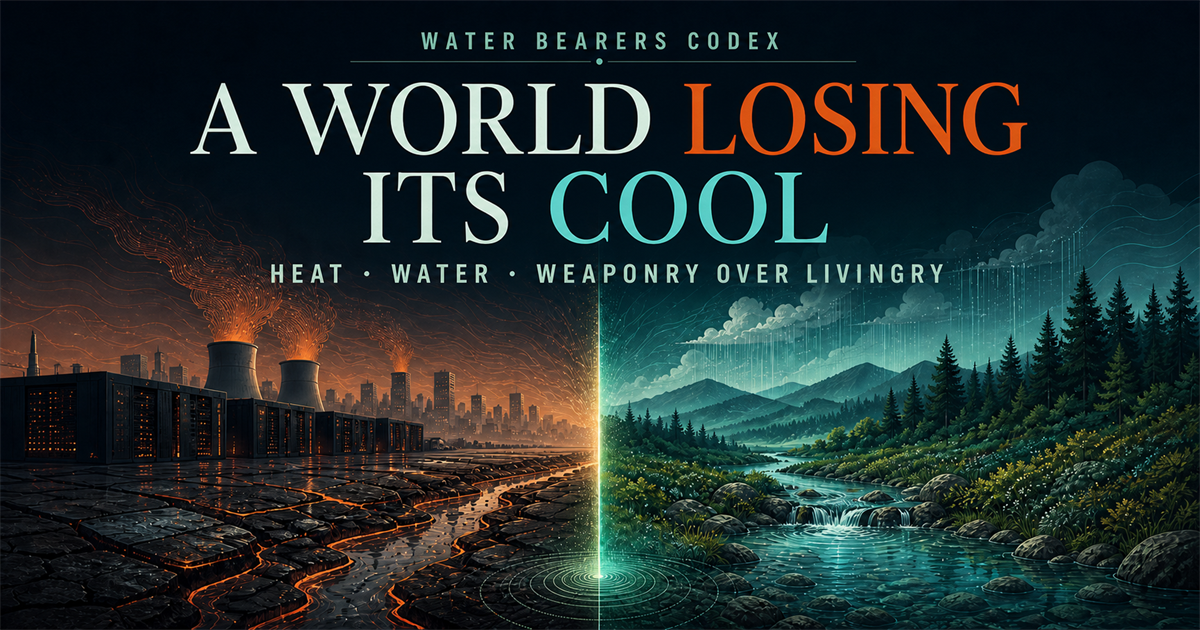
A World Losing Its Cool
A warming world builds ever more machinery that sheds heat, while clearing the forests and sealing the soils that help cool it. Follow the connections between data centers, disrupted rain cycles and the living watershed.
Enter the exhibitionWhen repair is discounted.
Water systems renew on biological and geological calendars; finance prices the present against the future. Interest, debt service, compounding returns and continual growth favor revenue that arrives now, while replenishment, maintenance and restraint appear as costs or delay. Sufficiency can look like failure simply because it does not accelerate.
Finance is not the mechanical cause of every flood or drought. It is a selection pressure: it helps decide which projects proceed, how rapidly reserves are drawn down, which maintenance is deferred and whose balance sheet must absorb repair. The danger is greatest when short repayment clocks govern forests, wetlands and aquifers whose recovery takes decades, centuries or longer.
A rogue system is recognized by its direction.
The Codex calls a system rogue when its physical motion becomes overwhelmingly one-way: concentrated stocks are opened, moved, burned, drained or dispersed faster than living processes can gather and renew them. Combustion, blasting, pumping, clearing and channelizing are not identical acts; they share a direction when each severs matter, water or energy from a cycle of return.
"Explosion" is a systems metaphor, not a claim that every outward or centrifugal motion is destructive. The test is whether the larger design closes the loop—moderating heat, rebinding waste, restoring infiltration and returning value to the source that made it possible.
Scarcity becomes social architecture.
Scarcity is never distributed by hydrology alone. Water rights, rates, infrastructure, land tenure, emergency rules and political power decide who can conserve, drill deeper, relocate or withstand interruption. The danger is not a prophecy of inevitable "water wars." It is a cascade: failed harvests, rising food prices, power shortfalls, rationed cities, displacement and—where trust and institutions are already weak—an escalating struggle over who receives what remains.
Research does not support a simple one-way path from drought to war. It does show that water insecurity can act as a threat multiplier alongside inequality, food insecurity, political exclusion and weak governance. The same resource can also compel cooperation—if allocation, restoration and pollution control begin before emergency becomes the governing condition.
Stewardship is an operating requirement.
To copy Nature is not to romanticize wilderness or reject technology. It is to design for return: borrow without liquidating, use without severing replenishment, and measure success by what remains capable of renewal.
Removing vegetation and wetlands, sealing soil, accelerating runoff and pumping faster than recharge can shorten water's residence time and weaken the living circuit. Restoring floodplains and wetlands, rebuilding soil, shading streams, slowing runoff and giving rivers room to meander can restore storage, filtration and resilience. These are observable processes, explored throughout The Water Cycle, The Living Soil, The Poisoned Aquifer and The Waterfall.
What the Water Bearer carries
The vessel is stewardship made visible.
Water symbolizes origin, renewal, purification, memory, adaptation and passage between states. It takes the form of every vessel without surrendering its nature; it descends, gathers, carries and returns. As metaphor, it joins the individual body to the watershed and the present generation to every life downstream.
The Water Bearer does not own what is carried. The image describes a temporary custodian: one who receives with attention, protects the source and returns water in a form still capable of sustaining life. Knowledge belongs to the same circulation—held long enough to understand, then poured onward. To bear water is also to answer for what we pass on.
Observed
Land cover, channel form and extraction alter infiltration, storage, runoff and water quality. See USGS groundwater science and EPA wetland functions.
Thesis
Growth and monetary incentives often privilege short-cycle throughput over long-cycle regeneration. That is the Codex's political-economic interpretation, not a law of fluid mechanics.
Symbol
The Water Bearer personifies stewardship: life-sustaining water carried between source and recipient without being severed from the cycle that renews it.
The question is not how completely we can command water. It is whether our designs can remain inside the cycle that sustains us.
The cast
THE OBSERVER
Viktor Schauberger
The originating lens: a forest warden, flume-builder and relentless reader of water in place. His work supplies the Codex's central provocation: “Design must remain answerable to the living systems that sustain it.”
THE MATHEMATICIAN
Walter Schauberger
Viktor’s son — formally trained, who spent his life giving the intuition a skeleton: the Pythagoras-Kepler System, the rectangular hyperbola, the hyperbolic cone and the egg.
THE TRANSLATOR
Callum Coats
The English-speaking world’s bridge — twenty years translating and systematising the archive into Living Energies and the Eco-Technology series, from which this codex draws its quotations.
THE SCIENTIST
Gerald Pollack
University of Washington bioengineer whose exclusion-zone research gives the “living water” intuition its closest modern laboratory counterpart — structured, charged, light-driven interfacial water.
How the journey runs
Five movements, read in order or wandered freely. The Substance builds the molecule and its strange appetites. The Water Cycle follows one drop through the whole living circuit — river, anomaly, forest, underworld, tap. The Motion ascends from implosion through the vortex to the tornado. The Energetics enters the contested country — charge, light, memory, the sacred. The Technologies tests it all against hardware, from the humble clay egg to the machines that ate his life. The Synthesis weighs everything; the Lexicon and Sources hold the record.
This codex asks three questions of every claim, in order: What did he actually say? What would have to be true for it to work? And what does the best available science find when it looks? Where the three answers agree, you will know. Where they part ways, you will know exactly where. The codex’s method · stated once, applied everywhere
Water Observatory · Drought & water quality
A weekly portrait. A longer record beneath it.
The U.S. Drought Monitor tracks dry conditions week by week. EPA's Water Quality Indicators map lets you explore sampled nutrients and pathogens across the United States. They answer different questions and are updated on different schedules.
01 · National drought assessment
U.S. Drought Monitor
Updated weekly

Explore the interactive map ↗
Assessment released Thursdays · conditions valid through Tuesday
02 · Surface-water monitoring
U.S. Water Quality Indicators
EPA record
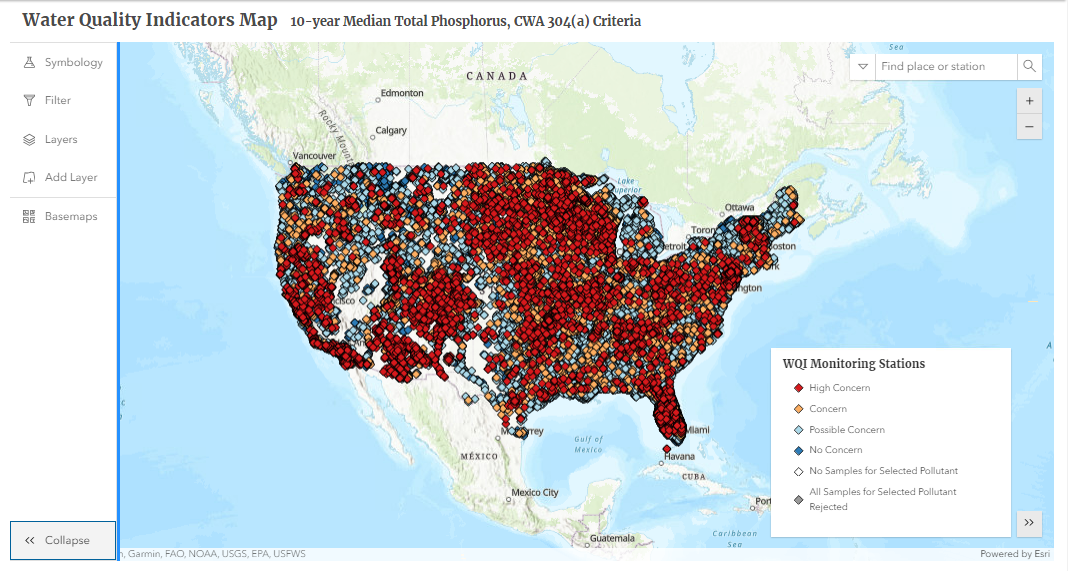
Example EPA view: ten-year median total phosphorus at sampled sites. Color shows comparison with a selected criterion; places without a point may lack qualifying samples.
Example map key · relative to selected criterion
No concern
Possible concern
Concern
High concern
Explore the interactive map ↗
Choose a pollutant and location in EPA's tool
Reading the drought mapThe U.S. Drought Monitor is a weekly expert assessment, not a real-time sensor feed. D0 means abnormally dry; D1–D4 mark increasing drought intensity. Rain after Tuesday's cutoff may not appear until a later release.
Reading the water-quality mapEPA's Water Quality Indicators is a screening tool for selected nutrients and pathogens, not a complete or live inventory of pollution. Monitoring data are refreshed twice a year; open the interactive map for the latest available records and local context.
Drought map: U.S. Drought Monitor, jointly produced by the National Drought Mitigation Center at the University of Nebraska-Lincoln, the U.S. Department of Agriculture, the National Oceanic and Atmospheric Administration and the National Aeronautics and Space Administration. Water-quality map image and tool: U.S. EPA ECHO Water Quality Indicators.
Field atlas · Die Karte · The complete field
The field remains mapped. Enter wherever the current pulls.
Follow five movements in sequence or start with a question: The Substance studies the molecule; The Water Cycle follows the planetary circuit; The Motion studies flow and vortex; The Energetics examines charge, light and memory; and The Technologies tests ideas against hardware.
The Synthesis draws the lessons together. Regenerative practices and A World Losing Its Cool extend the inquiry into landscape repair and heat. Forchheimer's Blackboard adds a supplemental river-science study. The Pyramid & the Reciprocal Funnel explores geometry, harmonics and cycles through an interactive study inspired by Walter Schauberger. Water, Held in Light gathers 68 original photographs into a personal water exhibition. The Lexicon and Sources hold the terms and record. Open entries lead to complete public exhibitions; dimmed entries remain in development.
Open exhibitionComing nextIn development
I · THE SUBSTANCE
The molecule & networkOPEN EXHIBITION
Father & mother · O and HOPEN EXHIBITION
The hunger of waterOPEN EXHIBITION
Water as organismOPEN EXHIBITION
The poisoned aquiferOPEN EXHIBITION
II · THE WATER CYCLE
Temperature gradientsOPEN EXHIBITION
The +4°C anomaly pointOPEN EXHIBITION
Full & half cyclesOPEN EXHIBITION
The planetary circuitOPEN EXHIBITION
The living soilOPEN EXHIBITION
III · THE MOTION
Implosion vs explosionOPEN EXHIBITION
The creative energy-vortexOPEN EXHIBITION
The whirlpool of lifeOPEN EXHIBITION
Radicals & the gyresOPEN EXHIBITION
The Cold FireOPEN EXHIBITION
The waterfallOPEN EXHIBITION
IV · THE ENERGETICS
The three ethericitiesOPEN EXHIBITION
Streaming potentialsOPEN EXHIBITION
The fourth phaseOPEN EXHIBITION
Light & soundOPEN EXHIBITION
Emoto & water memoryOPEN EXHIBITION
Sacred water & the springsIN DEVELOPMENT
V · THE TECHNOLOGIES
Kelvin's water dropperOPEN EXHIBITION
The spiral conduitOPEN EXHIBITION
The clay eggOPEN EXHIBITION
The hydraulic ramOPEN EXHIBITION
The River's BrakeOPEN EXHIBITION
Reservoir temperature controlsOPEN EXHIBITION
The implosion machinesCOMING NEXT
The Keely engineIN DEVELOPMENT
The Lily ImpellerOPEN EXHIBITION
CONCLUSION · THE SYNTHESIS
The Water Bearer's ChargeOPEN EXHIBITION
COMPANION EXHIBITIONS · THE WIDER FIELD
Regenerative practicesOPEN EXHIBITION
A World Losing Its CoolOPEN EXHIBITION
PHOTOGRAPHY · A PERSONAL EXHIBITION
Water, Held in Light68 PHOTOGRAPHS · RYAN NAGY
SUPPLEMENT · RIVER SCIENCE
Forchheimer's BlackboardOPEN STUDY
SUPPLEMENT · GEOMETRY & CYCLES
The Pyramid & the Reciprocal FunnelINTERACTIVE STUDY · WALTER SCHAUBERGER
REFERENCE · THE LEXICON
118 terms, six categoriesOPEN REFERENCE
REFERENCE · THE RECORD
Sources & further readingOPEN REFERENCE