
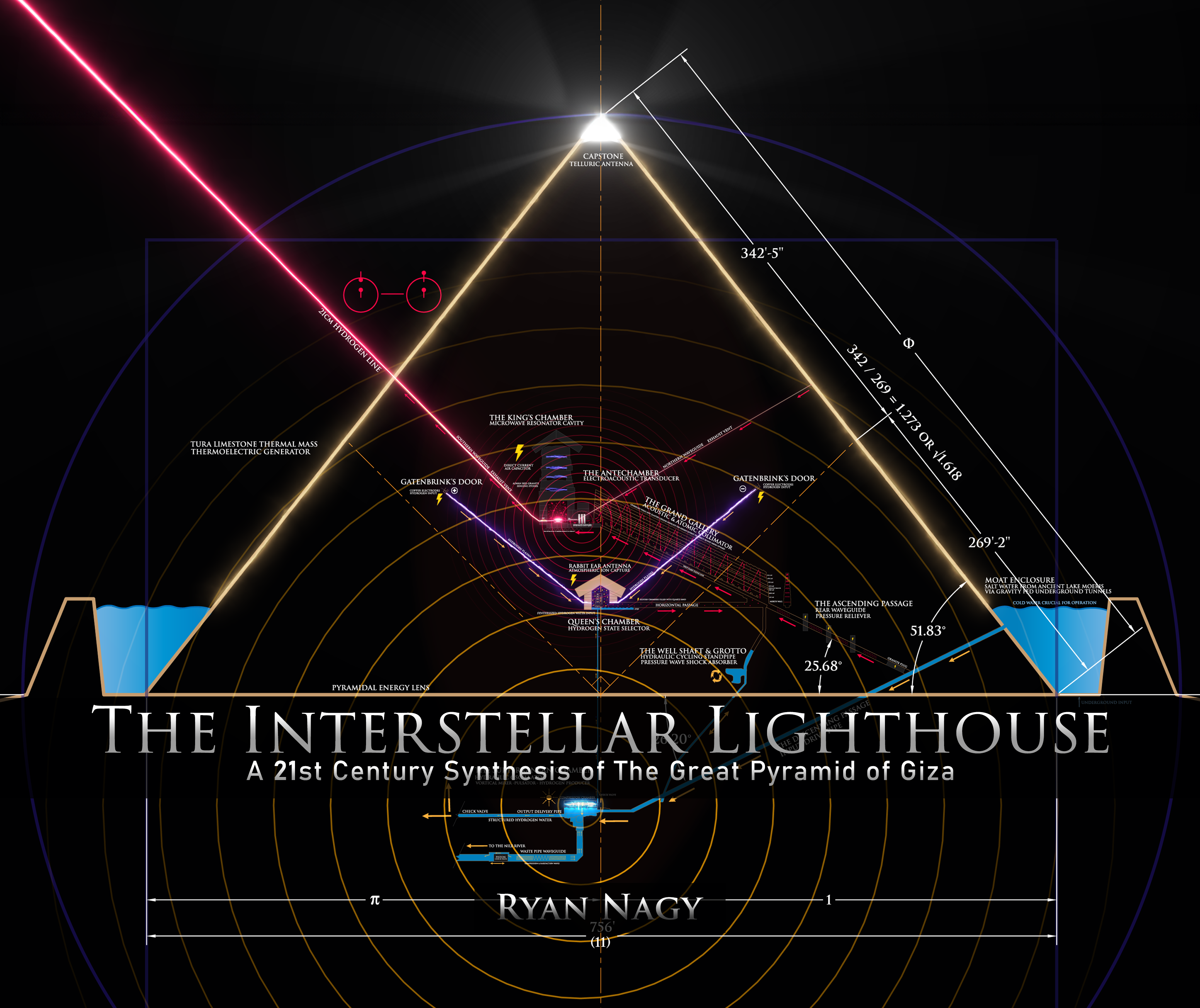
The Interstellar Lighthouse is a 21st-century reexamination of the Great Pyramid of Giza, synthesizing myth, history, and cosmic speculation into a new vision of humanity’s past. Mainstream Egyptology reduces the pyramid to a royal tomb for Pharaoh Khufu—a claim undermined by contradictions, unconvincing logistics, and silence on the structure’s astonishing precision. Its alignment to true north, astronomical orientation, and machine-like architecture suggest something far beyond funerary function. Considering its megalithic immensity, it is more plausible that the Dynastic Egyptians inherited the monument, venerating it and interring their honored dead within, as we live among it today—stewards of a relic from a forgotten epoch.
To understand such mysteries, we must zoom out and embrace a cosmic perspective. Humanity, in only a few centuries, has leapt from horseback to spacecraft, from firelight to artificial intelligence—an exponential ascent compressed into a blink of history. In the immeasurable expanse of galaxies and worlds, it is nearly certain that other civilizations have reached such thresholds long before us. If even a fraction of them mastered interstellar travel, the likelihood they spread their progeny, knowledge, or infrastructure across fertile worlds grows ever stronger. Earth may be one such place, seeded and shaped by forces far older than recorded history.
Ancient traditions echo this possibility. In Sumer, humanity’s first great civilization, clay tablets tell of the Anunnaki—“those who from the heavens came down.” They are described as progenitors, bearers of advanced knowledge, and overseers of human destiny. Across the world in Vedic India, texts speak of vimanas: aerial chariots driven by sound, mercury, and radiant energy, piloted by beings of immense wisdom and destructive power. In Mesoamerica, the pyramids of Teotihuacan map the solar system itself, while the Mayan calendar encodes cosmic cycles spanning tens of thousands of years. Even the enigmatic Nazca lines, etched across Peru’s desert, appear as vast landing markers, visible only from above. These are not isolated curiosities but parts of a unified design language, one that whispers of advanced intelligences guiding humanity at its dawn.
The Great Pyramid, through this lens, takes on the character of a technological instrument. Some theorists suggest it functioned as a hydrogen MASER, amplifying microwave energy at the resonant 21-centimeter hydrogen line—a universal frequency central to radio astronomy and modern SETI research. Its resonant chambers, piezoelectric granite, and subterranean hydraulics may have combined into a system that transduced sound, water pressure, and hydrogen into coherent microwave energy, broadcasting Earth’s presence into the cosmos. If true, this would make the pyramid not a tomb, but a cosmic beacon: a lighthouse bridging Earth and the stars.
This idea gains weight when considered alongside global counterparts. Stonehenge and Göbekli Tepe demonstrate megalithic mastery of celestial cycles. The legends of Atlantis speak of crystal-powered temples humming with energy. Vedic accounts describe celestial wars fought with radiant weapons, while Mesoamerican codices record precise galactic alignments no less impressive than modern astrophysics. Taken together, these fragments suggest a forgotten legacy of advanced knowledge—whether inherited from gods, Anunnaki progenitors, or civilizations erased by cataclysm.
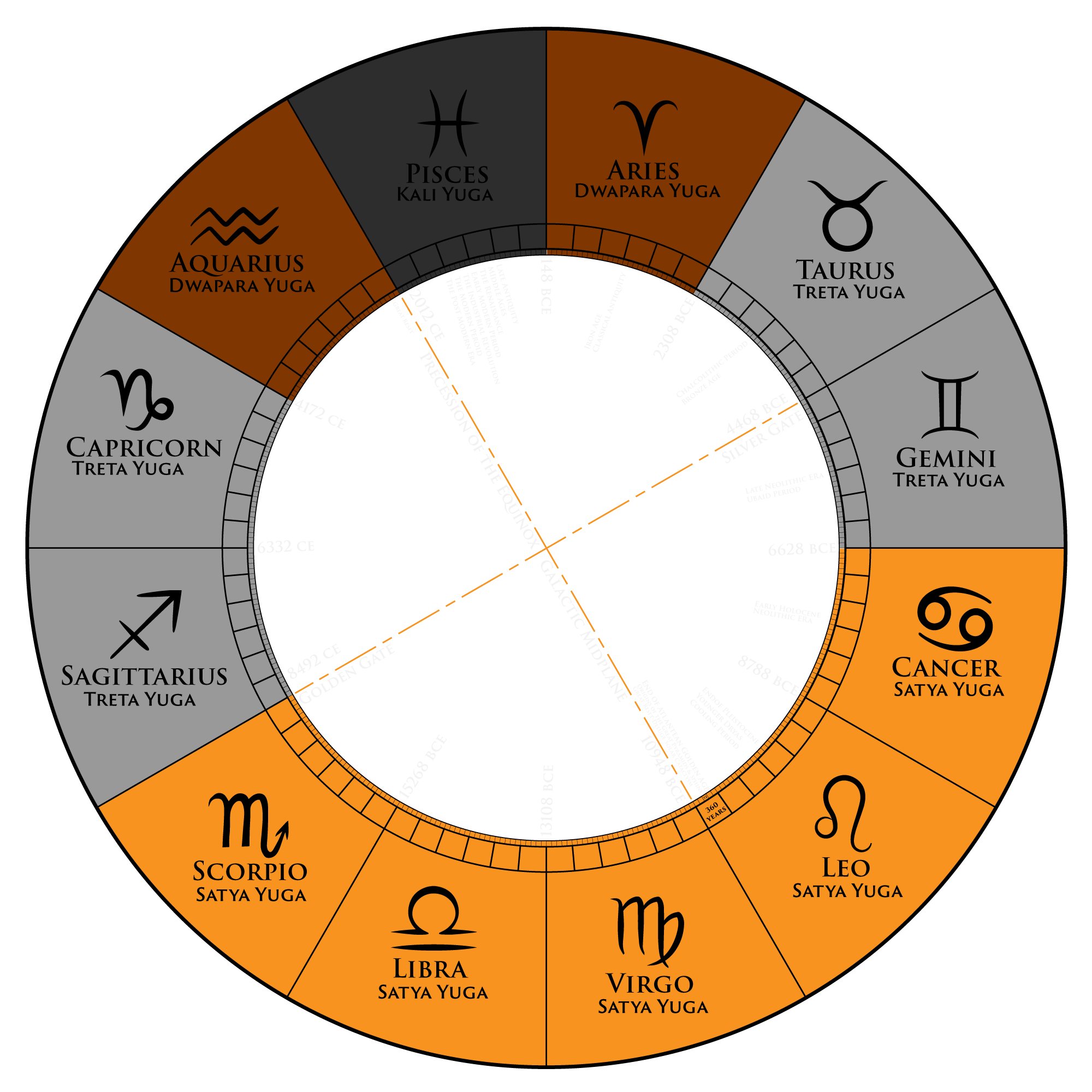
As we transition into the Age of Aquarius, the 21st century beckons us to rediscover these ancient frequencies. The 21 cm hydrogen line, born from the first atoms after the Big Bang, is more than a tool of science—it is a universal melody, a cosmic password for communication. To honor the ancestors, both human and otherworldly, we may symbolically offer a 21-gun salute, not to warfare, but to resonance, remembrance, and reconnection with the cosmos.
The Interstellar Lighthouse challenges us to ask: What if our greatest monuments are not mere tombs, but technological legacies? What if the myths of gods, Anunnaki, and vimanas are not fantasy, but memory? And what if humanity’s destiny is not to remain bound to Earth, but to rejoin a continuum of cosmic intelligence—to remember that we are part of a story written among the stars?