Water & pressure
Subterranean flow and pressure are examined as a possible source of periodic motion—the pulse that could set an architectural system into oscillation.
Book project · Great Pyramid / architectural systems reconstruction
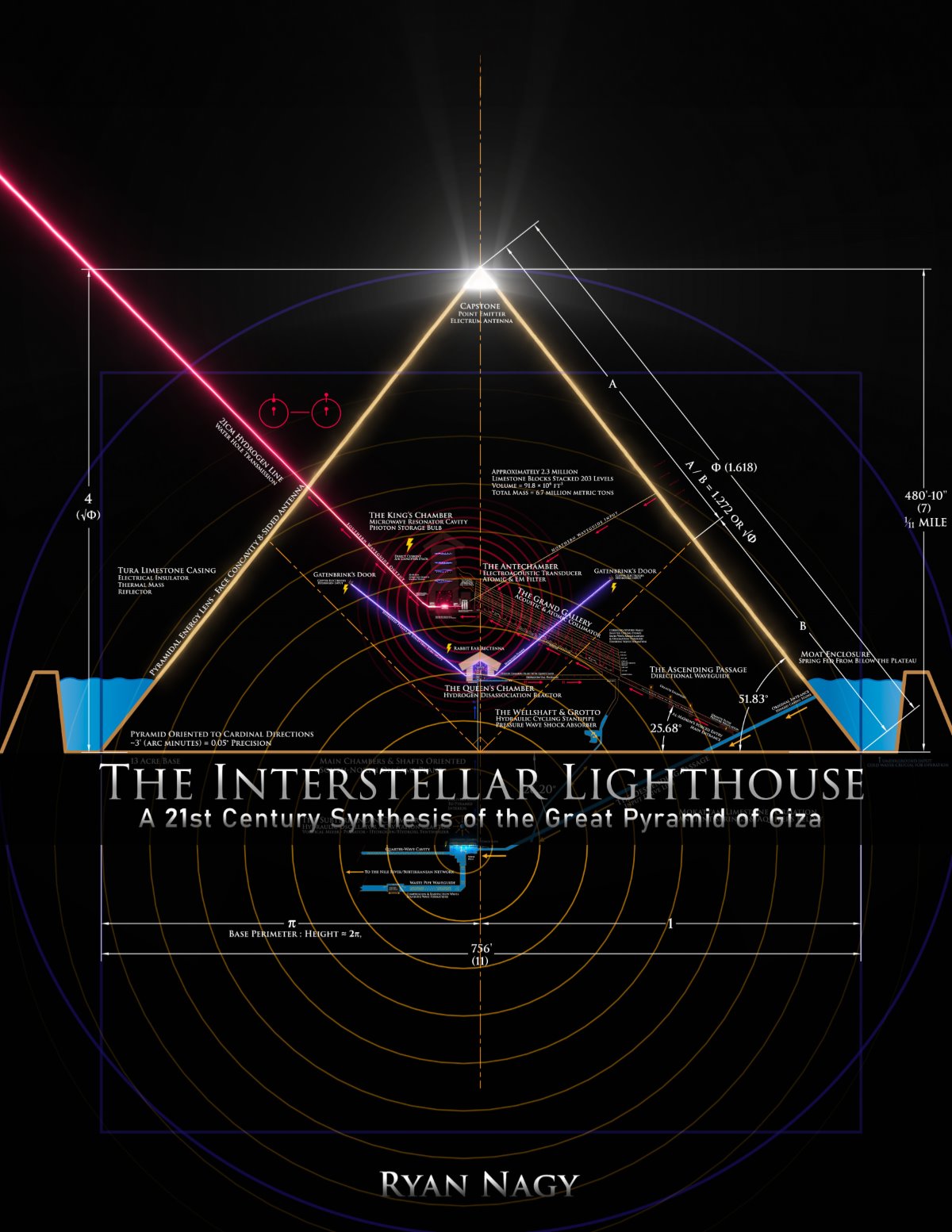
The Great Pyramid reconsidered as an architectural-scale geophysical and astrophysical computer.
The Interstellar Lighthouse reexamines the Great Pyramid of Giza as a possible interface between Earth and cosmos. Bringing architectural analysis, harmonic geometry, ancient traditions and speculative physics into one inquiry, it asks whether the monument’s chambers, shafts and carefully chosen materials once operated as a coordinated instrument. In this model, water and pressure drive a geophysical computer, while resonance, celestial alignment and astronomical cycles connect it to an astrophysical order. Here, “computer” means a physical architecture whose dimensions and materials organize natural processes into repeatable relationships.
The inquiry reaches from the monument’s internal anatomy to hydrogen’s 21-centimeter line and the search for extraterrestrial intelligence, exploring how such an instrument might transform terrestrial energy into a signal across space. It also considers whether myths of lost civilizations preserve traces of inherited knowledge, placing the pyramid within a larger question about humanity’s origins and relationship with the stars.
01 / The central proposition
The book’s central proposition joins two scales: the geophysical life of the planet and the astrophysical order in which it moves. It asks how the pyramid’s spatial, hydraulic, acoustic, astronomical and potentially electromagnetic relationships might be read together as one coordinated instrument.
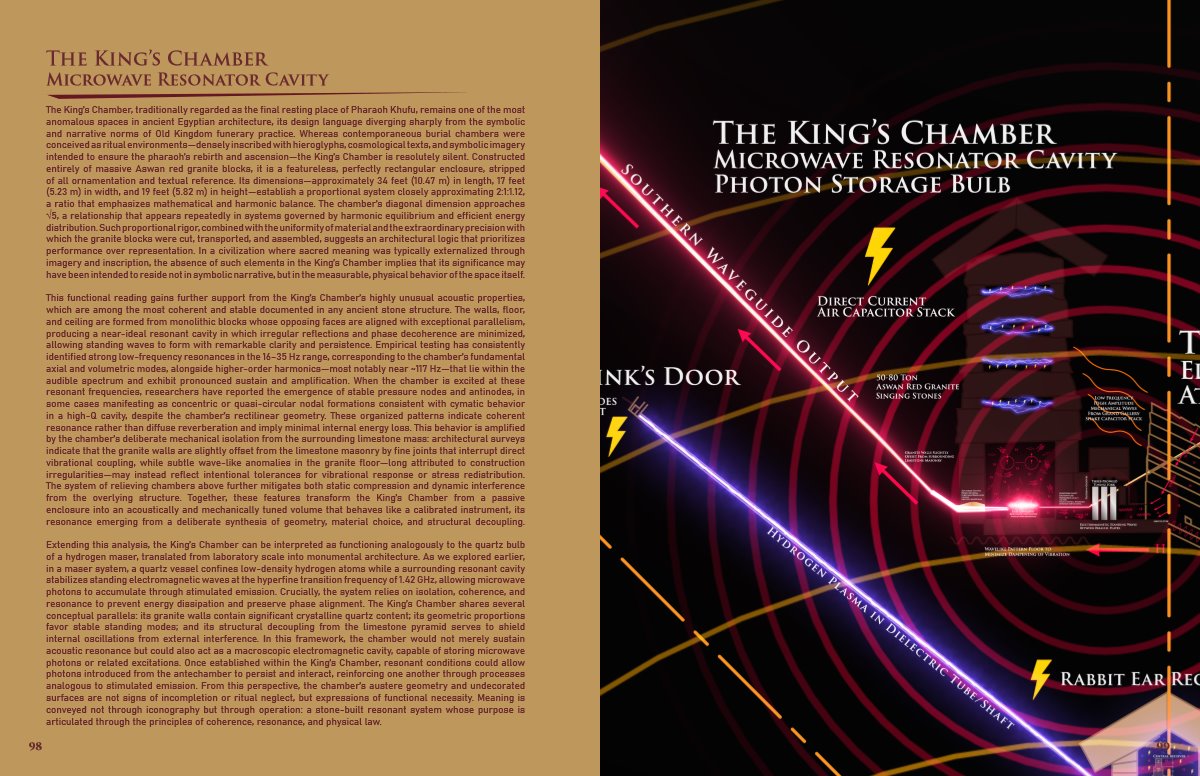
The proposed machine begins below ground. Water flow and pressure provide a possible source of periodic motion; the subterranean works, wellshaft, chambers, gallery, coffer, and narrow shafts become coupled components rather than isolated mysteries. Read alongside the design lexicon of resonance and radio-frequency engineering, cavities can select modes, passages can couple them, and shafts can be tested as waveguides. The comparison does not claim modern electronics were hidden in stone—it supplies a technical vocabulary for reconstructing what the architecture may have been arranged to do.
That reconstruction depends on metrology: dimensions, proportions, material transitions, alignments and the spatial sequence of the whole. The geophysical reading examines how ground, water, stone and cavity might interact. The astrophysical reading extends the model to celestial directions, periodic cycles and shared physical reference scales. Together, they frame a proposed instrument grounded in Earth and oriented toward the wider universe.
Time has separated the relevant knowledge into archaeology, architecture, geology, hydrology, acoustics, and electrical engineering. The pyramid may preserve a design conceived before those institutional boundaries existed. Its operating culture may be gone, but stone retains a durable technical record: proportion, orientation, and relationship can survive after language and machinery disappear.
This is the book’s ontological threshold: not a demand that the instrument hypothesis be believed, but permission to ask whether the inherited categories of tomb, monument, architecture, and technology are too narrow for the object in front of us. The proposition must still answer to measurement, simulation, and physical reconstruction.
Subterranean flow and pressure are examined as a possible source of periodic motion—the pulse that could set an architectural system into oscillation.
Rooms, passages, the gallery, and the coffer are modeled as connected resonant bodies capable of selecting, coupling, or amplifying modes.
Narrow channels and aligned axes are compared with pressure paths, acoustic guides, and radio-frequency waveguides to ask what signals they could conduct.
Dimensions, ratios, materials, and orientation form the technical grammar through which the proposed instrument can be modeled and tested.
02 / The astrophysical horizon
The Lighthouse looks outward from the forces of Earth toward the possibility of communication across space. Modern radio astronomy gives that inquiry a precise reference: the 21-centimeter line of neutral hydrogen.
Approximate rest wavelength
Approximate rest frequency
Physics / A natural reference
A small change in the relative spin configuration of a neutral hydrogen atom’s electron and proton can release a radio photon. This hyperfine transition produces the familiar 21-centimeter line. Because neutral hydrogen is widespread between the stars, the line gives astronomers a way to study interstellar gas. Its rest frequency is a physical reference that an independently developed radio astronomy could also recognize. NRAO · Radio astronomy notes ↗
For the Lighthouse, the significance is conceptual: a language of measurement can begin with properties of matter shared across the cosmos. Geometry, frequency and orientation become ways to formulate a question that extends beyond a single culture.
SETI / The search for intelligence
SETI—the Search for Extraterrestrial Intelligence—looks for signs of technology beyond Earth. In 1960, Frank Drake’s Project Ozma listened near the hydrogen line toward two nearby stars. Hydrogen and the hydroxyl radical also inspired the “water hole” idea: a relatively quiet microwave region between their emission lines, imagined as a gathering place for civilizations that know water. SETI Institute · The search and its history ↗
The natural hydrogen line is not itself an intelligent message. It offers a possible landmark on a much larger radio dial; modern searches examine other frequencies and optical signals too. SETI Institute · Why these frequencies? ↗
Within the book’s hypothesis, “astrophysical computer” asks whether an architecture could organize terrestrial processes in relation to celestial directions and physical reference scales. The hydrogen line supplies a modern comparison and a testable question; it does not establish that the Great Pyramid generated, received or transmitted a 21-centimeter signal.
03 / The overview effect
To look outward into the cosmos is also to encounter our home again. The question of other worlds can deepen our responsibility to this one.
One atmosphere.
One shared home.
An open cosmic horizon.
From lunar distance, Apollo astronauts could see Earth’s full disk suspended in darkness. In low Earth orbit, the view is closer: a curving horizon, immense weather systems and the atmosphere tracing the edge of the planet. These different vantage points make the relationship between Earth’s parts and its whole newly visible. NASA · Earth perspectives ↗
Many astronauts describe a profound shift in perspective, often called the overview effect, a term introduced by Frank White in 1987. Looking from the safety of a spacecraft into the surrounding vacuum, they see a living world sustained within a thin atmosphere. Accounts emphasize awe, the absence of visible political borders, the interdependence of life and a stronger sense of shared human identity. The experience varies, but for some it becomes a lasting commitment to care for Earth. NASA · Astronaut accounts of the overview effect ↗
That is the philosophical horizon of the Lighthouse: a profound connection to the cosmos can enlarge our sense of possibility while bringing our obligations into focus. The stars invite a felt sense of infinite possibility; the Earth asks what kind of civilization will answer. Our capacity to explore, listen and perhaps one day communicate depends on how well we sustain the living world from which every such effort begins.
The geophysical question is how a world works. The astrophysical question is how it belongs to a larger universe. The human question is how we learn to belong with it.
04 / Book architecture
The print edition moves from ground conditions and water dynamics through the pyramid’s internal anatomy, metrology, resonant behavior, celestial orientation, construction, and the longer problem of cultural memory.
The foundation stone, the monument’s measured order, and the central Interstellar Lighthouse hypothesis.
Ground → form → propositionThe pyramidal energy lens, water as an original substance, and comparative studies of ancient hydraulics.
Field → medium → flowMoat, passages, subterranean chamber, wellshaft, Queen’s and King’s chambers, gallery, shafts, sarcophagus, and capstone.
Passage → chamber → axisThe Orion connection and a visual reconstruction of how the architecture may have been planned and built.
Orientation → sequence → assemblyAtlantis traditions, astrological time zones, long civilizational cycles, and the concluding research horizon.
Memory → cycle → possibility05 / Selected plates
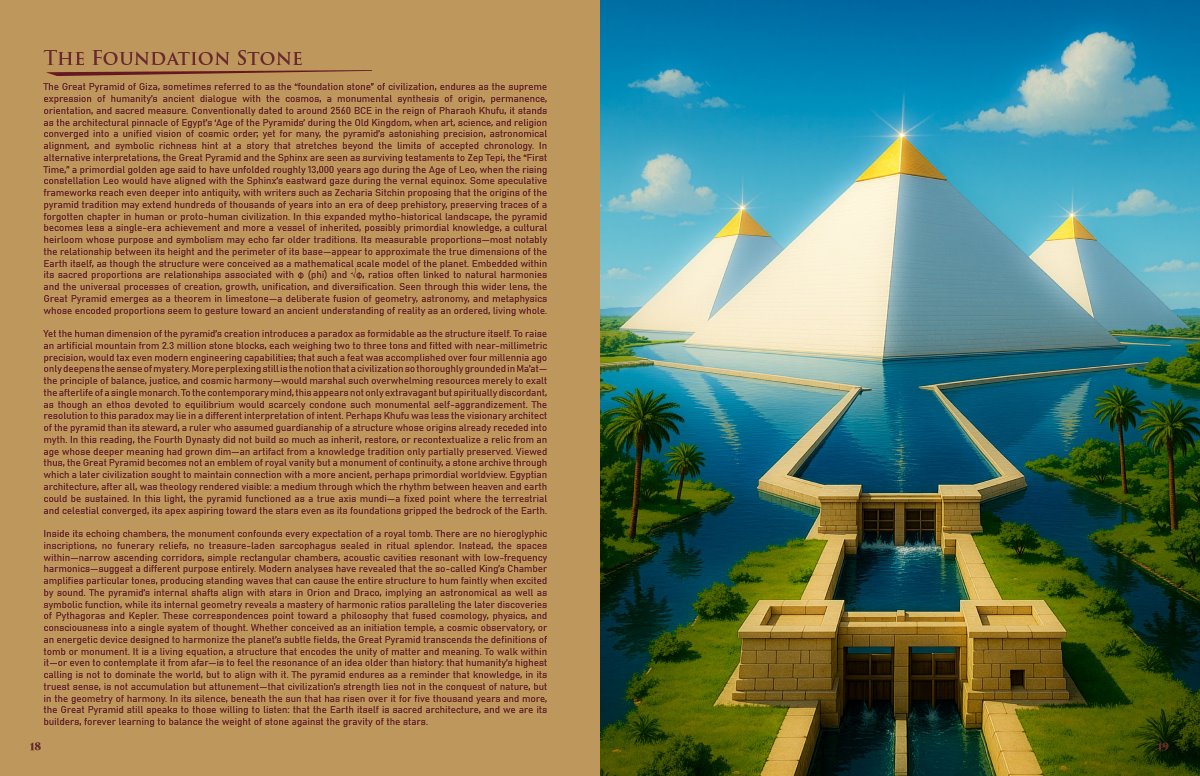
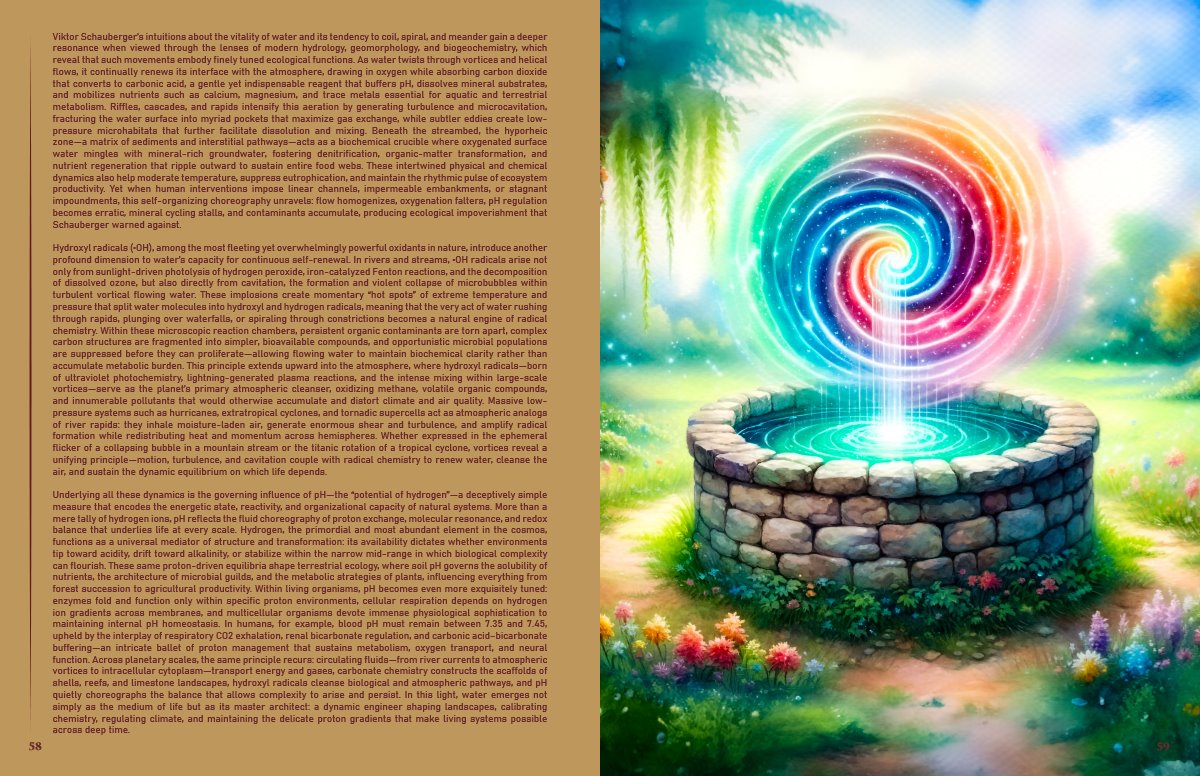
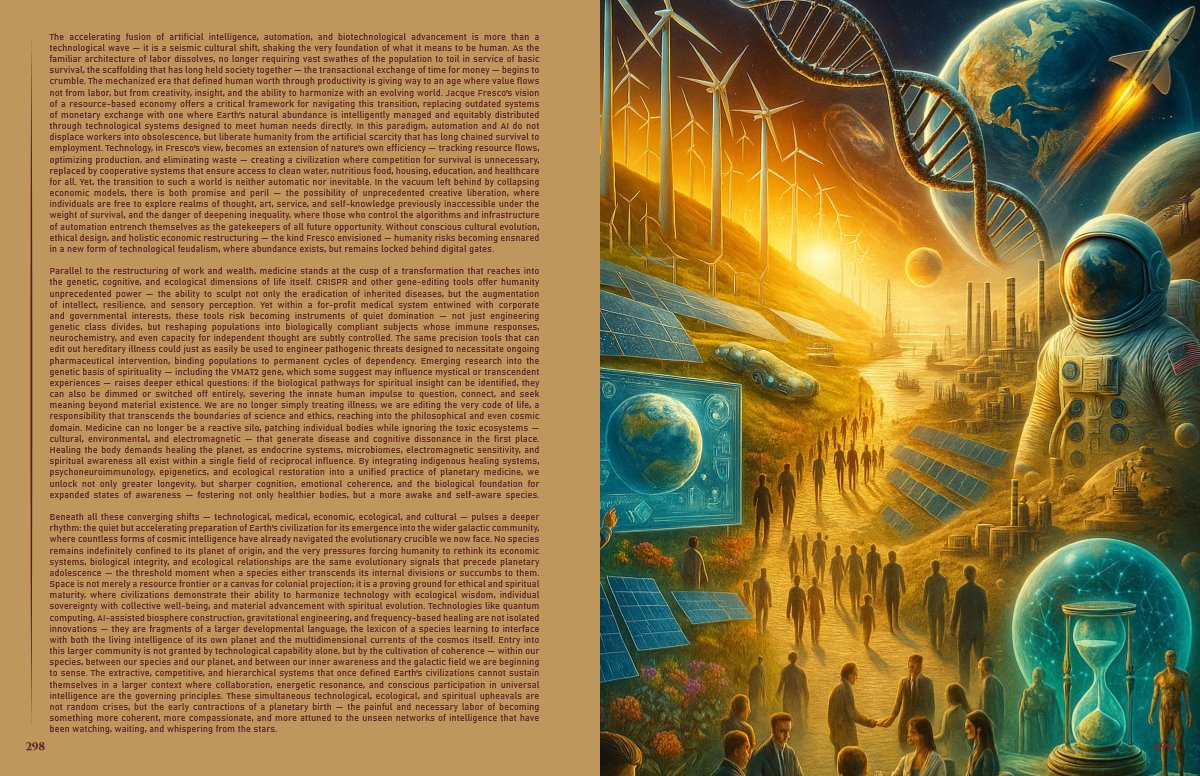
The book pairs long-form text with technical overlays, architectural diagrams, comparative illustrations, and visionary plates. These selected previews preserve the original project’s visual language without opening the complete manuscript.
06 / Sources & influences
These works helped shape Ryan Nagy’s perspective in The Interstellar Lighthouse. Each opens a different line of inquiry into pyramid architecture, resonance, cosmology, and ancient memory.
01 / Resonance & energy
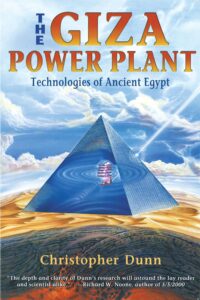
Dunn proposes that the Great Pyramid’s chambers and geometry formed an acoustic system that transformed terrestrial vibration into microwave energy. His engineering hypothesis informs the exhibition’s architecture-as-system reading.
Publisher details ↗
02 / Spiritual cosmology
Hurtak’s spiritual-scientific text explores higher consciousness, divine intelligence, and humanity’s place in a larger cosmos. It informs the exhibition’s questions about the meaning of contact and signals.
Official catalog ↗
03 / Directed energy
Farrell reads the Great Pyramid as the remnant of an ancient high-energy device with a military purpose. His lost-technology hypothesis raises questions about how powerful architecture might be used.
Book details ↗
04 / Ancient memory
Beginning with The 12th Planet, the series interprets ancient Near Eastern texts as accounts of visitors from beyond Earth. It contributes a speculative civilizational timeline and asks how knowledge might endure as myth.
Publisher details ↗About the synthesis: Ryan Nagy brings these distinct interpretations together with his own architectural and geophysical perspective. A pyramid transmitter or maser is a possibility explored by the exhibition; it is not an established archaeological or physical finding. Covers link to each book’s publisher or official listing.
Interactive exhibition / 3D reconstruction
Move through the chambers, follow the proposed flow of water and hydrogen, and explore the Lighthouse as one connected instrument.
Orbit · zoom · explore six operating stages
A visualization of the book’s working hypothesis. Proposed functions are not established archaeology.
07 / Editions & availability
The 308-page illustrated argument is available in hardcover and paperback. This exhibition offers its thesis and selected plates; an optimized digital reading edition remains in development.
Amazon opens in a new tab. Digital edition: coming soon.