Onward growth from within — the perfect division of unity, so that however diverse the whole becomes, every part answers the same way back to its source.
Before the form, meet the number. φ is not merely a quantity; it is a relationship — the only way to break a whole so that the break itself repeats the whole. Five exhibits, five faces of the same act.
Euclid called it the division in extreme and mean ratio: cut a line so that the whole stands to the greater part exactly as the greater part stands to the lesser. It is an asymmetric cut — nothing so trivial as a half — and yet it is the only cut that leaves no orphan. Whole, part, and remainder all speak the same proportion; divide the greater part again by the same rule and the conversation continues, identical, forever. Diversity without estrangement: no matter how many times unity is divided, every fragment relates back to its source in the same voice.
φ is not a number that stands alone; it is the square root of five wearing a disguise. Halve the sum of one and root-five and you have it: φ = (1 + √5) / 2. The construction is older than algebra. Lay two unit squares side by side and the diagonal of the double square is √5; swing half of that diagonal down from the midpoint of a square's base, and the base grows to exactly φ. Everything else follows. The golden number and its reciprocal differ by one and sum to root-five — φ − 1/φ = 1 and φ + 1/φ = √5 — so unity and the root of five are the difference and the sum of the golden pair; square that sum and you hold five itself.
This is what fractal self-similarity means in the strict sense: a whole whose parts are scaled copies of itself, so that the relation of part to whole is the same at every level. Cut a root-five rectangle and it yields a golden rectangle and that rectangle's reciprocal — φ and 1/φ, side by side — or, cut the other way, a square flanked by two golden rectangles, since √5 = 1 + 2/φ. Cut those and they yield squares and smaller golden rectangles, forever. The parts do not merely fit inside the whole; they regenerate it — put the pieces back and the ratio returns unchanged, at any scale, in any order. Binet's formula says the same in arithmetic: every Fibonacci number is the golden pair's powers, differenced and divided by √5, so the whole sequence is born again at each term from the same seed. That is why the exhibition reads root-five as the signature of living growth — the fivefold flower, the five-fingered hand, the pentagonal cross-section of the DNA helix. Life grows by adding to itself a part shaped like the whole, and √5 is the measure of that inheritance.
Nature rarely computes with rulers; she counts. The Fibonacci sequence — 1, 1, 2, 3, 5, 8, 13, 21… each term the sum of the two before — is arithmetic's imitation of the golden cut, growth that only ever adds what it already is. And as the sequence elevates, something quietly wonderful happens: the ratio of each term to its predecessor forgets the sequence's humble beginnings and converges, alternating above and below, to φ and φ alone. Start with any two numbers whatsoever and the same fate awaits. The golden ratio is not planted in the seeds; it is the attractor every additive growth falls into — which is why pinecones, sunflower heads, and nautilus chambers arrive at it without ever being told.
Draw the diagonals of a pentagon and the golden ratio appears not once but everywhere at once. Every chord of the pentagram crosses every other in extreme and mean ratio: tip to crossing, crossing to crossing, chord to chord — φ at every intersection, in every direction. Inside the star a smaller pentagon waits, and inside that pentagon a smaller star, inward and outward without end — growth from within, drawn with five straight lines.
The star is a fractal in the exact sense. Its chord d divides into a tip, a middle and a tip — a, b, a — with a = φ·b; but the middle b is the side of the inner pentagon, and the inner star's own chord is precisely the outer tip a, so each tip already contains the entire next star, and its tips contain the next, forever. Read off the lengths and they form one unbroken series — d, s, a, b, a′, b′, a″ … — each exactly φ times the next and each the sum of the two that follow it, the Fibonacci rule made of straight lines. And the series has a limit the eye can see: the sides of all the nested pentagons, added together to infinity, sum to exactly the chord — s + s/φ² + s/φ⁴ + … = φ·s = d. The star approximates its own diagonal with its own descendants, and the approximation is never finished and never wrong.
This is why the ancients made the pentagram the symbol of the microcosm. Five points: head, two hands, two feet — the figure of man inscribed in the star, as Agrippa drew him and as Vitruvius measured him. Man is the cosmos in miniature, the living text upon which the universe may be read, because he carries the proportion in his own architecture: the navel dividing the body's height, the phalanges of each finger, the frame answering the same ratio the galaxies and the seed-heads answer. The Pythagoreans wore the star as the sign of health — of a body whose parts, however diverse, all relate the same way back to their source.
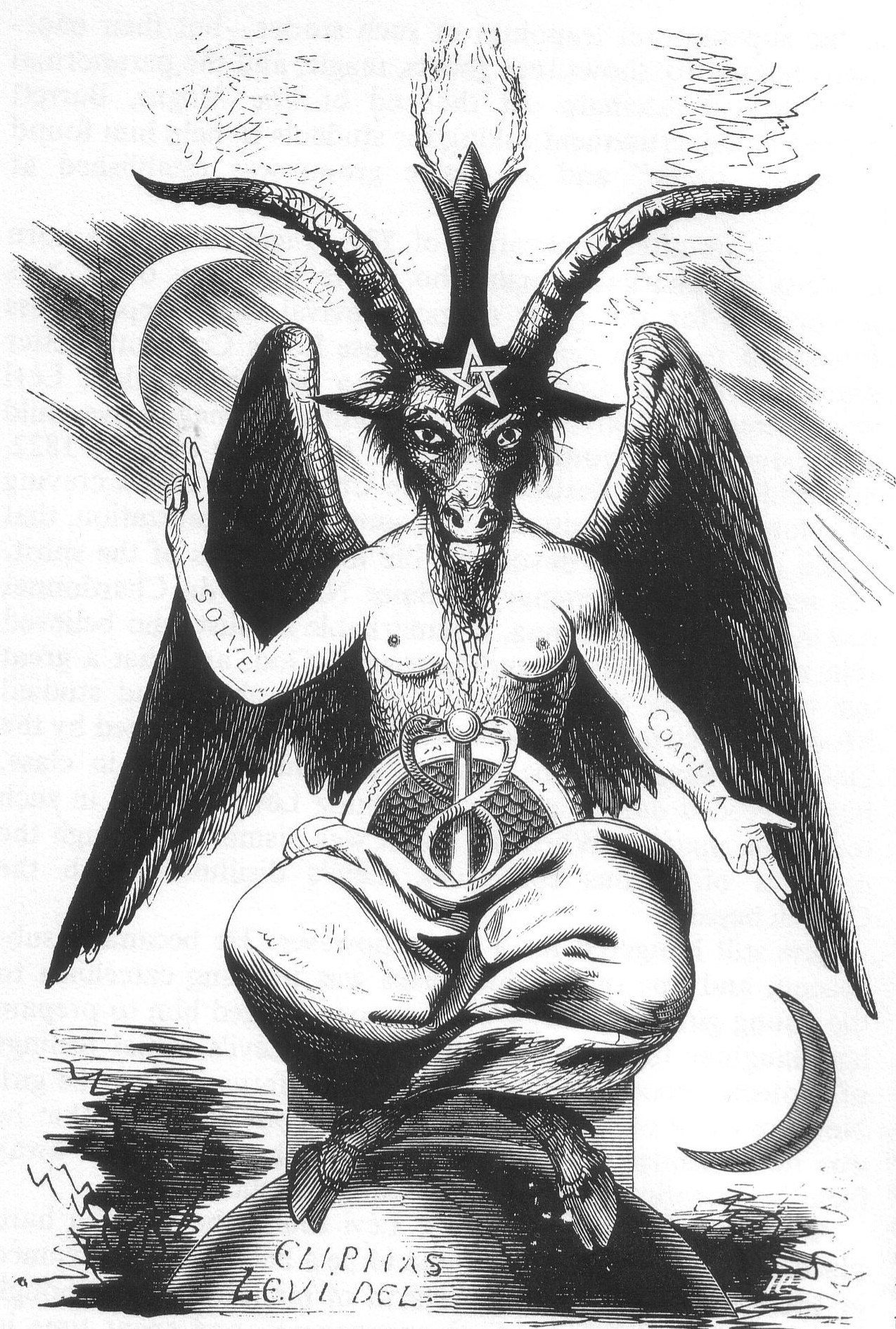
Ask most people what a five-pointed star inside a circle means and they will say witchcraft, or worse. The reputation is recent, and the geometry has never heard of it.
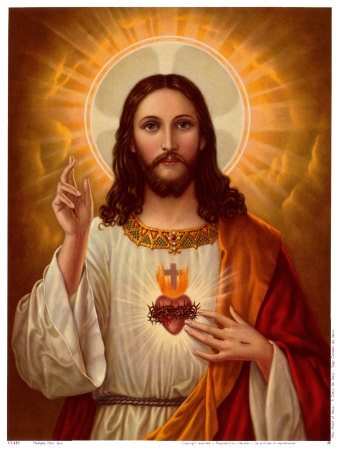
For most of its history the pentagram was a sign of health, worn by the Pythagoreans as the seal of their brotherhood; the device on Sir Gawain's shield, standing for the five wounds and the five virtues; the figure Agrippa drew a man inside, to show that the human body was built to the measure of the cosmos. Only in the nineteenth century did Éliphas Lévi turn the star on its head and name the inverted form the sign of the goat, and only in the twentieth was that inverted form taken up as a badge by those who wanted the opposite of the divine. The symbol did not change. The story told about it did.
Look at the geometry instead and the story dissolves. The pentagram is nothing but the golden ratio drawn five times: every crossing cuts every chord in extreme and mean ratio, every angle is a multiple of 36°, and the proportion that builds it is the one that builds the shell, the seed-head, the leaf and the hand. Nothing in a proportion is good or evil. It is a law, the way the law that makes water find its level is a law. A powerful symbol, certainly — but its power is the power of a true statement about how form grows, and a true statement serves whoever is speaking it.
What the orientation carries is a reading, not a geometry. One point up — spirit above the four elements, the head above the hands and feet — is the star of the divine, the microcosm standing upright. Two points up, the witch's foot, is the same figure inverted: matter set over spirit, the head turned toward the ground. Turn the star below and watch: every crossing keeps its φ, every angle its 36°. Only the meaning turns.
This exhibition reads the upright star as the plain emblem of traditional cosmology — of the natural order that paganism, in its oldest and least sensational sense, simply meant: the recognition that one proportion runs from the spiral of a galaxy to the bones of a finger. Stand a person in the star and the chord of the arms falls at the golden cut of the height, exactly where the navel sits. We are, quite literally, walking pentagrams — the microcosm, built by the same regenerative law that builds every living thing, growing by adding to itself a part shaped like the whole. That law is what every exhibit in this hall measures.
Cut one tip off the pentagram with a straight line and you are holding the golden triangle: 36° at the apex, 72° at each base, and two sides that stand to the base exactly as φ to 1. The angle and the number are the same fact seen from two sides — cos 36° is φ/2, precisely, as if the angle were the ratio folded inward. Bisect a base angle and the triangle sheds an obtuse gnomon of 108° and leaves behind a smaller golden triangle, identical in shape; bisect that one, and the next, and the vertices fall along a logarithmic spiral — the curve the sunflower follows and the nautilus builds. This is the pentad's whole secret: 36, 72 and 108 are not three angles but one, seen at three scales, and the pentagram is the map of where they meet.
A ratio relates two lengths. Ask the same relation to fill a plane and it becomes an angle; ask it to fill a volume and it becomes a solid. Three instruments follow the golden ratio out of the line and into the world.
Projected into space, the golden recursion becomes an angle. Divide the circle by φ² and you get 137.5077…° — the golden angle, the rotation a sunflower, a pinecone, an artichoke applies between one seed and the next. Botanists call the resulting spiral lattice phyllotaxis; it is the golden cut of Exhibit A, performed on a circle instead of a line.
The reason it works is the deepest fact about φ: it is the most irrational number. Its continued fraction is an unbroken chain of 1s — [1; 1, 1, 1, …] — which makes it the number worst approximated by any fraction. Turn by a rational angle and seeds stack into spokes, squandering the gaps between them. Turn by an almost-rational angle and the error compounds until the pattern collapses into arms. Turn by the golden angle and every new seed lands, forever, in the largest gap available — no memory, no measurement, no re-planning. A one-line growth rule that yields statistically perfect packing at every radius, from the tenth seed to the ten-thousandth.
The efficiency argument writes itself: maximum florets per disc, maximum sunlight per leaf with minimum self-shading, rainwater spiralled to the root, load spread evenly through the head. But feel how sharp the optimum is — nudge the dial below even half a degree off φ and watch the uniformity meter fall as the lattice degenerates into starving spirals. The knife-edge is the point. The plant grows to the only blueprint that never wastes a seed, and it does so with no memory and no measurement: the golden angle is the rule, and the rule is enough. A sunflower is the pentagram's arithmetic — five, eight, thirteen, twenty-one spirals — grown one golden turn at a time.
Golden recursion has a shape. The dodecahedron and its dual the icosahedron are the only Platonic solids built on φ: every vertex of a dodecahedron lies on the corners of three golden rectangles, and nesting dodeca inside icosa inside dodeca produces an infinite cascade in which every distance is a power of φ — perfect fractal embedding in three dimensions.
The dodecahedron's twelve pentagonal faces are the pentagram's home in three dimensions: draw the diagonals of every face and the star appears twelve times over, each crossing still cut in golden section. Nesting the two solids — dodecahedron, its dual icosahedron, dodecahedron again — produces a cascade in which every distance is a power of φ: the golden cut of Exhibit A, the star of Exhibit D and the spiral of Exhibit E, all at once and in three dimensions. The shells diving below are that recursion set in motion.
The dodecahedron's twin has a skeleton, and the skeleton is made of φ. Take three golden rectangles — each 1 by φ — and stand them mutually perpendicular, one in each coordinate plane, interlocked through their common center like a gyroscope's gimbals. Their twelve corners are the twelve vertices of the icosahedron, exactly: (0, ±1, ±φ) in the yz-plane, (±1, ±φ, 0) in the xy-plane, (±φ, 0, ±1) in the xz-plane. Join every corner to its five nearest neighbors and thirty edges and twenty faces close without a single further measurement.
So the most symmetric of the solids is, underneath, three golden cards laid on the x, y and z axes — φ written into space three times at right angles. Its dual, drawn through the face centers, is the dodecahedron of Instrument 02; the same three rectangles govern both, which is why the two can be nested forever without ever changing the number.
Every hall in this gallery has shown the same fact in a different dress.
A line cut so that its part repeats its whole. A number that is the root of five in disguise. A sequence that forgets its seeds and remembers only φ. A star whose every crossing is that cut, whose every chord contains the next star, whose descent has no floor. A seed-head that grows by one golden turn at a time and never wastes a place. Two solids built on three golden cards at right angles, nesting forever. One relation, asked to be a length, an angle, a solid, a living form — and answering each time in the same voice.
The pentagram is where they all meet, and that is why it deserves the reading this gallery gives it. Its five points are not a superstition. They are the fivefold symmetry of the flower, the starfish and the hand — the form living things take when they grow by regeneration, each new part shaped like the whole. Stand in the star and the chord of your arms falls at the golden cut of your height. We are walking pentagrams, the microcosm; all life is microcosmic, and grows by the same regenerative law. Symbols are neutral; proportions are true. Turn the star upright and it says, as plainly as geometry can say anything: onward growth from within — the perfect division of unity, so that however diverse the whole becomes, every part answers the same way back to its source.